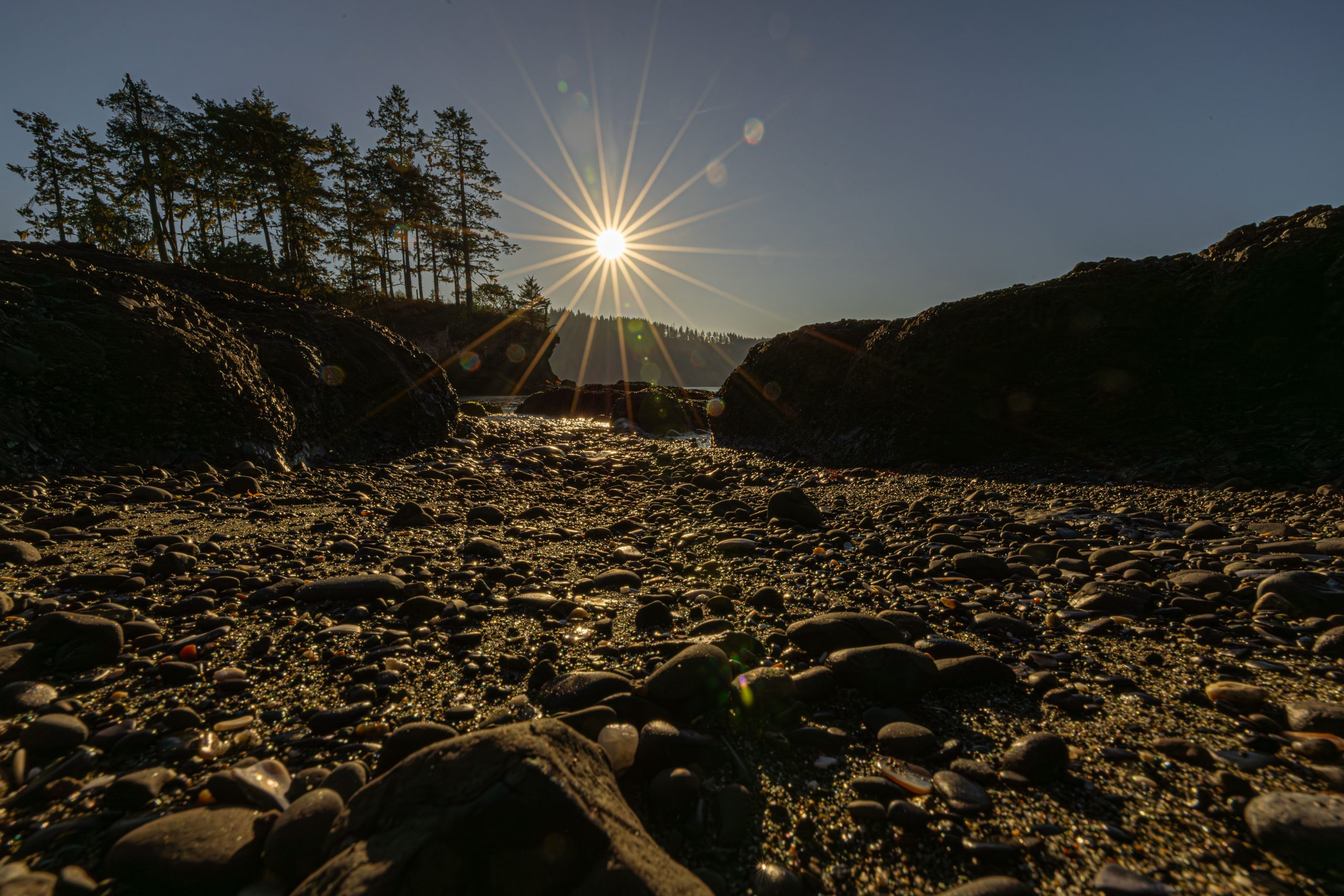
Portraits, coastlines, old-growth forests, and quiet everyday moments gathered from the place I call home. These images aim to capture the Soul of the Pacific Northwest in Cinematic Portfolio Film. If you’ve ever stood at the edge of the Pacific and watched the fog roll in off the water, you know the Olympic Peninsula doesn’t need a filter. It already looks like a dream. That feeling, raw, unhurried, and unmistakably Pacific Northwest, is exactly what I set out to capture in my latest cinematic portfolio film.
This portfolio piece is a love letter to the Olympic Peninsula. It blends still photography and video into a single cinematic experience, moving between portraits of real people, wide open coastlines, cathedral-like forests, and the small, honest moments that most people walk right past.
I didn’t travel somewhere exotic to make this. I walked out my door.
That’s what makes the Peninsula such a compelling subject. The light here does something different. The weather shifts in ways that turn ordinary scenes into something extraordinary. The people who live here carry a quiet dignity that photographs beautifully, if you take the time to earn their trust.
This film is my attempt to show all of that. Not just what the Olympic Peninsula looks like, but what it feels like.
The Work Behind the Work
Cinematic Portrait Photography on the Olympic Peninsula
Finding authentic portraits in a place this rural takes patience. I worked with people across the Peninsula, in their homes, on their land, in the towns along the water, and tried to make images that felt true to who they are rather than posed for a camera.
Soft, natural light defines most of this work. The overcast skies that the Pacific Northwest is known for are actually a portrait photographer’s closest ally. They wrap subjects in even, flattering light that no studio setup can quite replicate. That same quality of light shapes the headshot and brand photography work I do with clients, where the goal is always an image that feels real, not performed.
Coastal and Landscape Photography
The coastline of the Olympic Peninsula is unlike anywhere else in the country. Sea stacks rise out of the water like monuments. Driftwood the size of school buses lines beaches that feel entirely wild. The tide comes in fast and the light changes faster.
I shot across multiple seasons to capture the full range this stretch of coast can offer, from golden hour calm to storm-light drama and everything in between. For clients whose brands are rooted in this region, this landscape is more than backdrop. It’s part of the story.
Forest and Interior Work
The old-growth forests of the Olympic Peninsula, particularly inside Olympic National Park, are among the most photographically rich environments I’ve worked in. The Hoh Rain Forest, the Hall of Mosses, the trails winding through Sitka spruce and western red cedar all reward slow, deliberate photography.
The video work inside the forest was especially challenging and especially rewarding. Exposing for deep shadow while retaining highlight detail in breaks of canopy light is exactly the kind of technical problem I love solving. It’s the same attention to light and environment that I bring to every brand and portrait session.
Why I Made This as a Combined Photo and Video Portfolio
Still photography and video each capture something the other can’t. A photograph stops time and holds it. Video lets you feel the movement, the wind in the trees, the surf pulling back over stone, the moment before a laugh breaks across someone’s face.
Combining both into a single cinematic piece felt like the most honest way to show what working on the Olympic Peninsula is actually like. The film has a rhythm to it, moving between stills and motion in a way that draws you deeper into the place rather than just flashing highlights at you.
For clients considering brand photography or visual identity work, this film is also a window into my process and how I think about light, pacing, environment, and story. Those same instincts shape every project I take on, whether it’s a headshot session, a brand campaign, or a full visual identity build.
Cedar & Shore Studio is a creative photography and branding studio based on the Olympic Peninsula in Washington State. I specialize in cinematic portrait photography, brand and business storytelling, and intentional visual design for clients who want work that feels authentic, polished, and rooted in place.
Services include professional headshots, brand photography, creative portrait sessions, and visual identity support for small businesses and organizations across the Pacific Northwest. I also offer web and interactive design for clients who want a cohesive digital presence that aligns with their brand, because great photography deserves a great home.
Every project is guided by a commitment to craft and a deep understanding of how light, environment, and story come together to create images that last.
If you’re a business, creative, or individual looking for photography or design that reflects the true character of your work and your place, I’d be glad to connect.
The full cinematic portfolio film is on YouTube now. I’d love to know what it brings up for you, and if you know someone who might connect with this work, sharing it genuinely helps.
If you’re a business, creative, or individual looking for photography or design that reflects the true character of your work and your place, I’d be glad to connect.
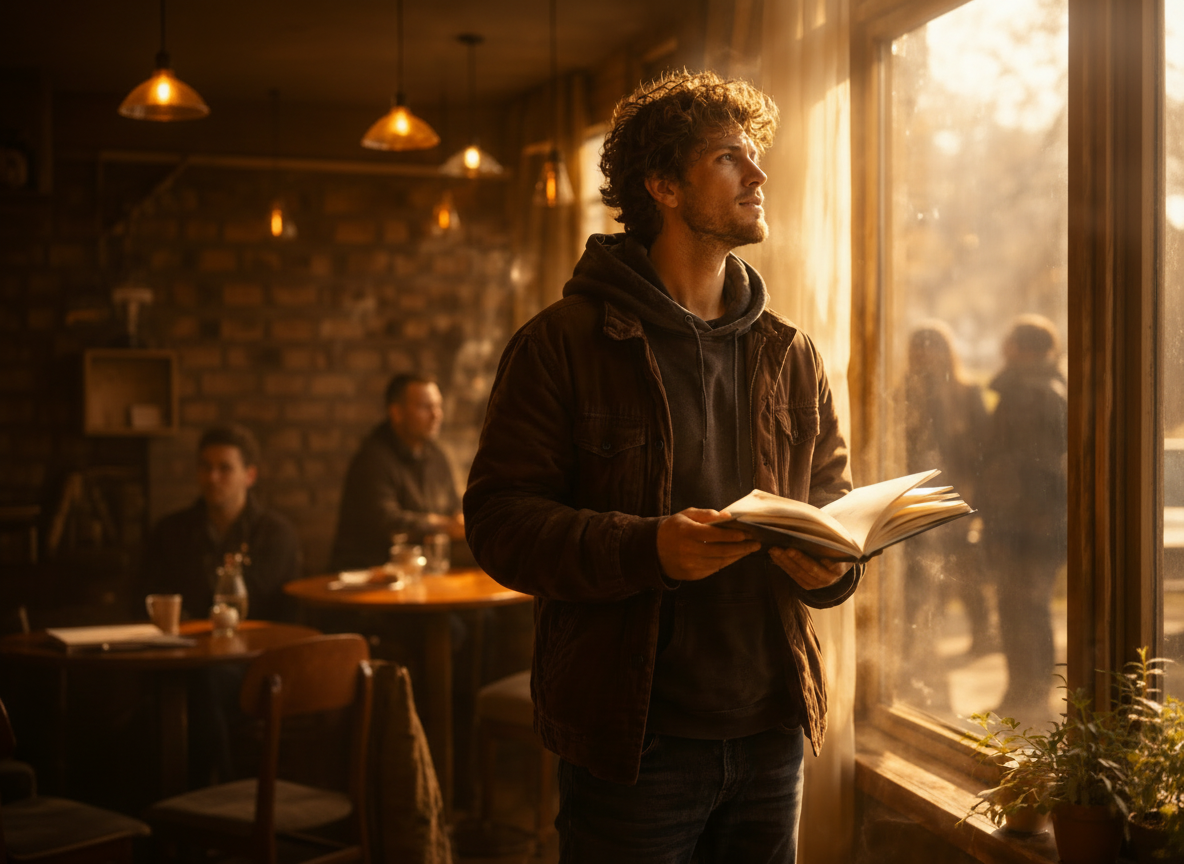
Luca always chose the same seat in the corner cafe. It was tucked beneath a tall window where the morning light softened into a warm glow across his sketchbook. He liked the way the world moved on the other side of the glass. Drawing was his ritual. His anchor. His way of understanding the world without having to speak too loudly in it.
He sketched the people outside the window. A woman adjusting her scarf. A teenager laughing into a phone. A man sitting alone on a bench, shoulders heavy, hands trembling slightly. Luca paused. Something about the man’s posture felt familiar. The quiet weight. The loneliness. The way someone can look like they are holding their breath through life.
As Luca watched, the man tried to lift a heavy bag but struggled. People walked past without slowing down. Luca felt the old instinct to stay in his seat, to remain the observer rather than the participant. But creativity had taught him to notice things. To see what others missed. And once he saw it, he could not pretend he had not.
He closed his sketchbook and stepped outside.
Can I help you, he asked gently.
The man nodded, relieved. Together they lifted the bag onto the bench. The man exhaled, offering a small, tired smile.
As Luca stepped back, his sketchbook slipped from his coat pocket and fell open on the pavement. The man glanced down. His expression changed. The exhaustion in his eyes softened into something warm.
This is beautiful, he whispered.
Luca froze. No one had ever said that to him. Not once.
He picked up the sketchbook with trembling hands. Something inside him shifted. He had helped a stranger, but the stranger had given him something he had not known he needed. Recognition. Connection. A moment of being seen.
As he walked back into the cafe, he whispered to himself, Spread Kindness Today.
Not as a task.
As a truth.
Creativity had opened his eyes to someone who needed help.
Kindness had opened a door he did not yet understand.
And that door was the beginning of his journey.
Chapter Two: Be the Reason Someone Smiles
The next morning Luca returned to the cafe with a strange mix of hope and fear swirling in his chest. He kept replaying the stranger’s reaction to his sketch. The softness in the man’s eyes. The way his shoulders had eased. The quiet warmth in his voice.
It had been such a small moment, yet it felt enormous.
Someone had smiled because of something Luca created.
Someone had felt lighter because of him.
But doubt crept in quickly.
What if the man had only said it to be polite.
What if Luca had imagined the meaning.
What if his work was nothing special at all.
He tried to draw, but his hand trembled. The lines felt stiff. Forced. Empty.
Then the bell above the cafe door chimed.
The stranger walked in.
He spotted Luca immediately and approached with a gentle steadiness.
I hope you do not mind, he said, but I wanted to thank you again. Yesterday meant more to me than you know.
Luca blinked, unsure how to respond.
Your drawing reminded me that there is still beauty in the world, the man continued. I have been carrying a heavy season, and your art gave me a moment of peace. You did that. You were the reason I smiled yesterday.
The words hit Luca with unexpected force.
Not flattery.
Not politeness.
Truth.
The man sat down across from him.
You have a gift, he said. Not just for drawing, but for seeing people. That is rare. Do not hide it.
Luca felt something inside him loosen.
A knot he had carried for years.
A door opening.
Be the Reason Someone Smiles, he thought.
Maybe creativity could do that.
Maybe he could do that.
Maybe he already had.
For the first time, he wondered if his art had a place in the world beyond his sketchbook.
And that possibility scared him.
But it also lit something bright inside him.
Chapter Three: Join the Conversation
The man stayed for coffee.
Tell me about your work, he said.
Tell me why you draw.
Luca hesitated. Sharing his art was one thing. Sharing himself was another. But something about the man felt safe. So he opened the sketchbook and let the pages turn.
They talked for nearly an hour. About creativity. About loneliness. About the courage it takes to make something and let it be seen. Luca felt himself opening in ways he had not expected. He felt part of something larger than himself. A conversation he had always wanted to join but never believed he belonged in.
When the man left, Luca felt changed.
He felt invited.
He felt called.
That night he posted one of his sketches online with the caption, Join the Conversation. It was the first time he had ever shared his work publicly.
Some people loved it.
One person criticized it.
Luca felt both reactions deeply.
But he kept going.
Because connection always comes with risk.
And creativity always asks for courage.
Chapter Four: Share Your Story
The next day the man returned to the café again. This time his expression carried a quiet seriousness.
May I ask you something, he said as he sat down.
Not about your technique. Not about your style.
About you.
Luca nodded, unsure where this was going.
Why do you hide your work, he asked.
What are you afraid people will see?
The question landed like a stone dropped into deep water.
It was not about art.
It was about him.
Luca felt his throat tighten. He looked down at his hands, then at the sketchbook resting between them.
I hide it because it feels safer, he said.
If no one sees it, no one can misunderstand it.
Or dismiss it.
Or dismiss me.
The stranger listened with a stillness that felt like respect.
Luca continued, I draw people because I know what it feels like to be unseen. I draw them because I want to understand them. I draw them because I hope someone will understand me too. But sharing that feels like stepping into the light without armor.
The man nodded slowly.
Thank you for telling me that, he said.
I think you deserve to know who you have been talking to.
He introduced himself.
A well known artist.
A mentor to many.
A person whose work Luca had admired for years without ever imagining he would meet him.
Luca felt the world tilt.
Not because of the fame.
Not because of the opportunity.
But because someone he respected had seen him clearly and believed in him anyway.
The man smiled.
Your work has something real in it. Something honest. I would like to help you share it with the world, if you are willing.
Luca felt fear rise, but something stronger rose with it.
Courage.
Possibility.
A sense of belonging he had never felt before.
In the weeks that followed, Luca began sharing his work publicly. He posted sketches, stories, and reflections. He invited others to share their own creative journeys. People responded with honesty and gratitude. A community formed around his courage.
He realized something important.
Creativity is not about perfection. It is about connection.
Kindness is not about grand gestures. It is about noticing.
Stories are not meant to be locked away. They are meant to be shared so others can find their way.
His final message to his growing community read:
Share Your Story.
Someone out there needs the light you carry.
And people did.
They shared their work.
They shared their fears.
They shared their hopes.
Luca had become the reason someone smiled.
And in doing so, he had found his own place in the world.
Cedar & Shore Studio Reflection
Kindness, Connection, and the Creative Life
Luca’s story reminds us that creativity is not only about what we make. It is about how we move through the world. His journey begins with a simple act of noticing, the kind of quiet awareness that artists carry like a second heartbeat. Creativity sharpens our eyes to the small moments that others pass by. It teaches us to see people, to sense the weight they carry, and to respond with presence.
Kindness becomes the first brushstroke in Luca’s transformation. Not a performance, not a grand gesture, but a choice to step out of the corner seat and into someone else’s moment. That choice opens a door he did not expect. The stranger’s smile becomes a mirror, reflecting a truth he had never allowed himself to believe. His work matters. His presence matters. He matters.
Connection grows from that spark. A conversation begins. A sketchbook becomes a bridge. Two people sit across from each other and share the kind of honesty that creativity often protects. This is the heart of a creative lifestyle. It is not isolation. It is not perfection. It is the courage to let your inner world meet someone else’s.
When Luca finally shares his work with others, he discovers what many artists learn only after years of hiding. Stories create community. Vulnerability invites belonging. When we share what is real, people gather. They lean in. They recognize themselves in the lines and shadows of our work.
At Cedar and Shore Studio, we believe creativity is a way of living that honors these moments. Kindness, connection, and storytelling are not separate from the creative process. They are the foundation of it. They shape the way we see, the way we create, and the way we show up for others.
Luca’s story is a reminder that every creative act carries light. When we choose to share that light, even in small ways, we make room for others to do the same.
Kindness, Connection, and Creative Life Research
Creativity, kindness, and human connection are not separate lanes. Research suggests they reinforce one another in powerful ways and shape a sustainable creative life.
Creatives move through the world with heightened attention. They notice details, moods, gestures, and stories that others pass by. This sensitivity is not only the foundation of artistic work. It is also the foundation of kindness and connection.
This report explores how people living creative lifestyles can practice kindness, build meaningful connection, and contribute to a more compassionate world. It draws from research in creativity studies, social psychology, prosocial behavior, and community arts practice.
The Creative Lifestyle as a Foundation for Kindness
Creatives tend to engage deeply with perception, emotion, and meaning. Research shows that:
Artistic observation enhances awareness of subtle emotional cues, making creatives more attuned to the needs of others. https://theartscollegewestsussex.com
This heightened awareness positions creatives to practice a form of kindness rooted in noticing the quiet, attentive kind that sees what others overlook.
How creatives naturally express kindness
Offering thoughtful recognition
Creating welcoming spaces for others to share
Using their skills to support community needs
Encouraging others through process‑focused feedback
Reflecting back beauty, meaning, or dignity through their work
These acts are small, but research shows that small acts of kindness have outsized impact on both giver and receiver.
They call it the Tree of Life, though it is no myth.
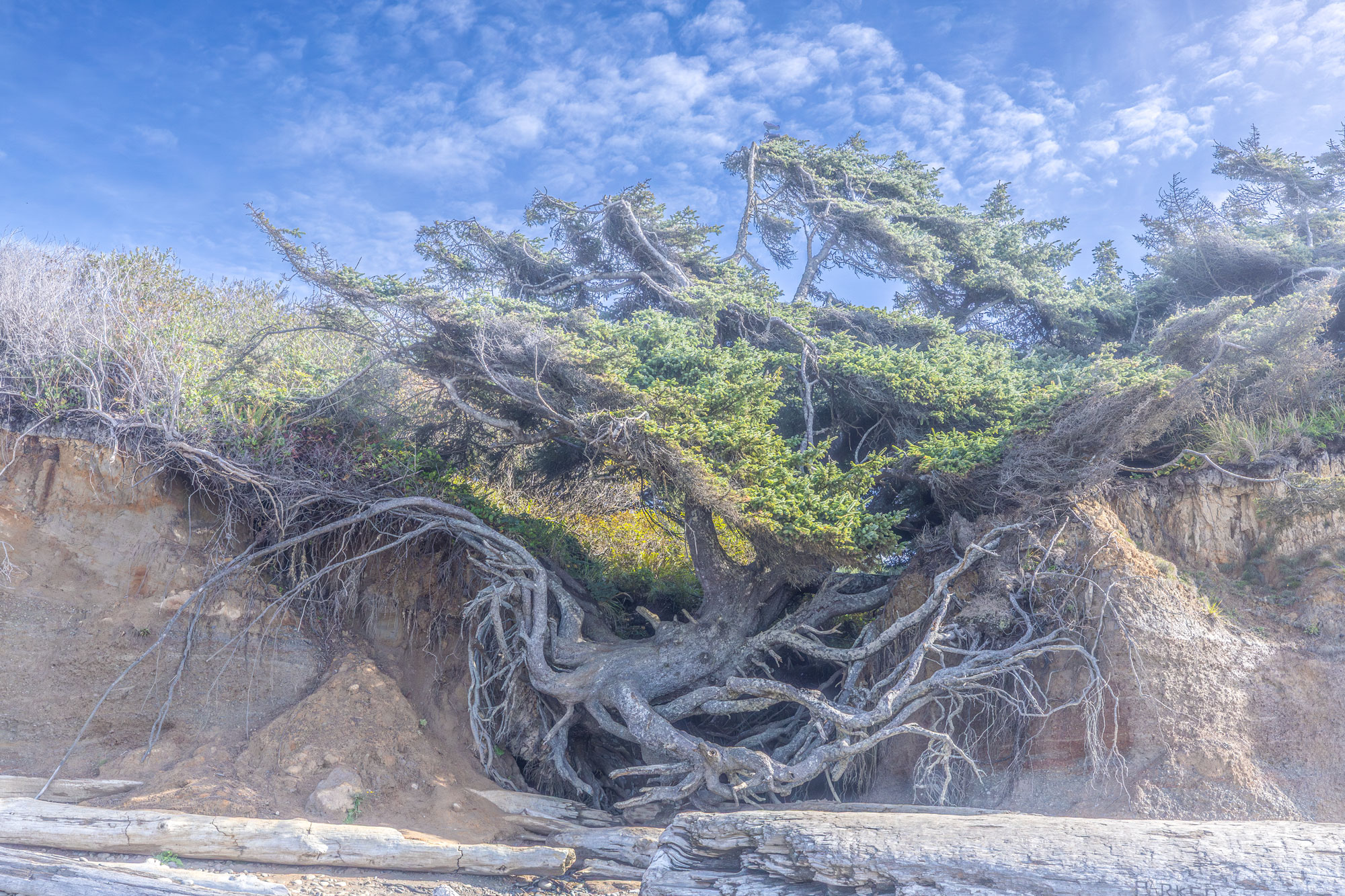
On the edge of the continent, where the Pacific exhales salt and memory, the tree clings to a cliffside. Its roots once rested in certainty, yet they now reach like searching fingers over a widening void. The cliff has become a cathedral of erosion shaped by tide, time, and the quiet force of wind.
No soil cradles it. No rock anchors it.
Even so, it lives.
Travelers pause in awe. Tourists marvel. Locals nod with quiet recognition. Photographers kneel to honor its defiance. Yet the tree does not perform for anyone. Instead, it endures. Each leaf offers a small refusal. Each limb stands as a testament to the unseen threads that hold us when the ground gives way.
Beneath it, the earth has fallen away. A gaping mouth of sand and shadow opens below, reminding us that even the sacred can lose its footing.
Still, it lives.
Some say the tree speaks of resilience. Others whisper that it offers a warning. Meanwhile, the tree remaining silent, simply holds its place between collapse and grace, between what once existed and what insists on continuing.
It is not rooted in soil. It is rooted in wonder.
The sky opens in blue. The cliff yawns beneath. The tree, luminous and stubborn, gathers its strength for another season. It continues to rise, even as the world shifts around it.
It anchors itself not in earth, but in story.
And still, it lives.
-Tom Buscher
Tree of Life Photography in Washington State
This image was captured on the Olympic Peninsula, where land and sea meet in mythic tension. The Tree of Life in Washington State is more than a landmark. It is a living symbol of endurance, mystery, and place-rooted storytelling.
Photography, image editing, and writing by Tom Buscher, founder of Cedar & Shore Studio.
You can read more about the Tree of Life in Washington State on Visit Olympic Peninsula or explore its location near Kalaloch Beach in Olympic National Park via NPS.gov.