Category: Local Features

  • Olympic Peninsula Photographer Captures the Soul of the Pacific Northwest in Cinematic Portfolio Film

    Olympic Peninsula Photographer Captures the Soul of the Pacific Northwest in Cinematic Portfolio Film

    Portraits, coastlines, old-growth forests, and quiet everyday moments gathered from the place I call home. These images aim to capture the Soul of the Pacific Northwest in Cinematic Portfolio Film. If you’ve ever stood at the edge of the Pacific and watched the fog roll in off the water, you know the Olympic Peninsula doesn’t need a filter. It already looks like a dream. That feeling, raw, unhurried, and unmistakably Pacific Northwest, is exactly what I set out to capture in my latest cinematic portfolio film.

    Watch the film: Olympic Peninsula — A Cinematic Photography & Video Portfolio

    What This Film Is About

    This portfolio piece is a love letter to the Olympic Peninsula. It blends still photography and video into a single cinematic experience, moving between portraits of real people, wide open coastlines, cathedral-like forests, and the small, honest moments that most people walk right past.

    I didn’t travel somewhere exotic to make this. I walked out my door.

    That’s what makes the Peninsula such a compelling subject. The light here does something different. The weather shifts in ways that turn ordinary scenes into something extraordinary. The people who live here carry a quiet dignity that photographs beautifully, if you take the time to earn their trust.

    This film is my attempt to show all of that. Not just what the Olympic Peninsula looks like, but what it feels like.

    The Work Behind the Work

    Cinematic Portrait Photography on the Olympic Peninsula

    Finding authentic portraits in a place this rural takes patience. I worked with people across the Peninsula, in their homes, on their land, in the towns along the water, and tried to make images that felt true to who they are rather than posed for a camera.

    Soft, natural light defines most of this work. The overcast skies that the Pacific Northwest is known for are actually a portrait photographer’s closest ally. They wrap subjects in even, flattering light that no studio setup can quite replicate. That same quality of light shapes the headshot and brand photography work I do with clients, where the goal is always an image that feels real, not performed.

    Coastal and Landscape Photography

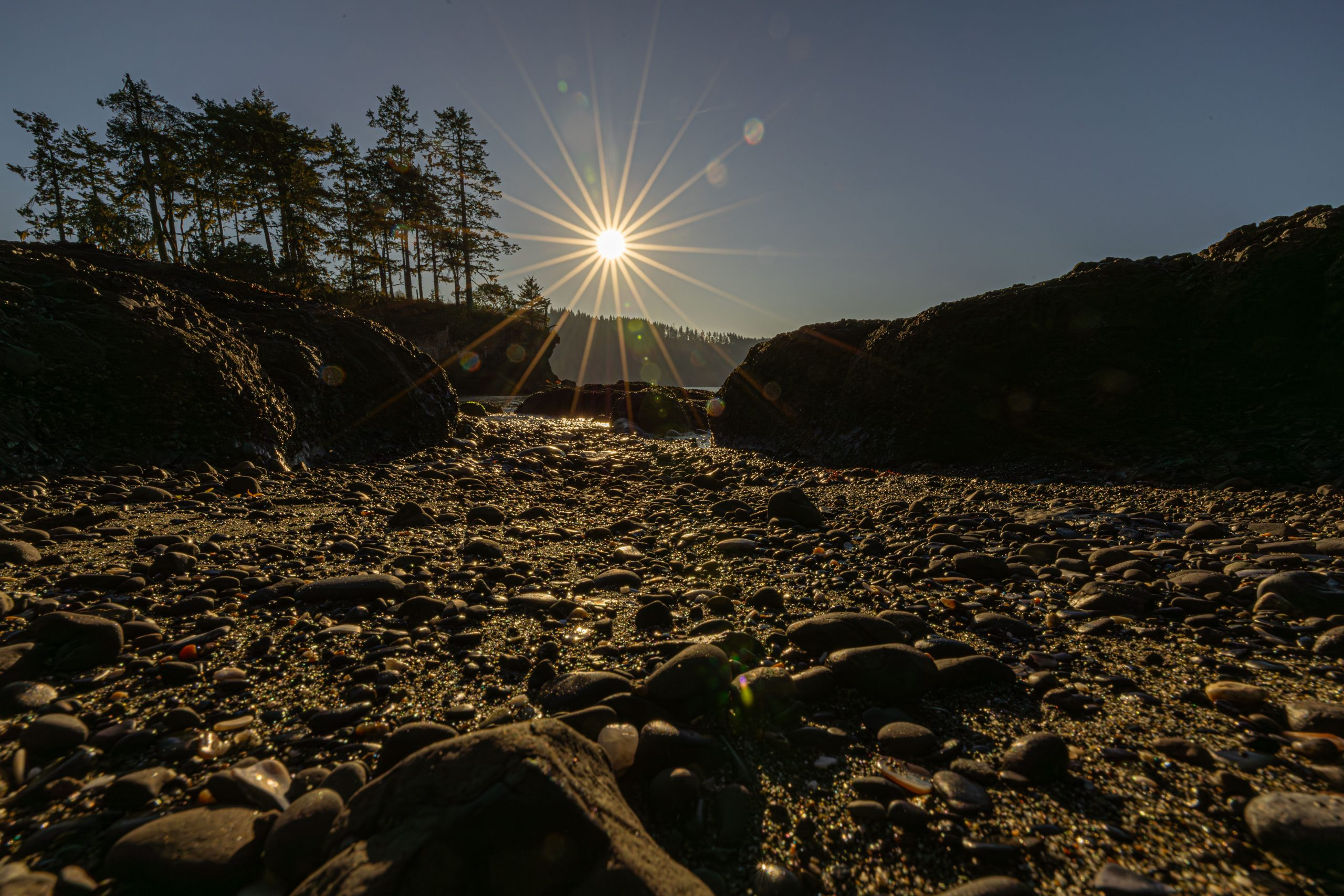
    The coastline of the Olympic Peninsula is unlike anywhere else in the country. Sea stacks rise out of the water like monuments. Driftwood the size of school buses lines beaches that feel entirely wild. The tide comes in fast and the light changes faster.

    I shot across multiple seasons to capture the full range this stretch of coast can offer, from golden hour calm to storm-light drama and everything in between. For clients whose brands are rooted in this region, this landscape is more than backdrop. It’s part of the story.

    Forest and Interior Work

    The old-growth forests of the Olympic Peninsula, particularly inside Olympic National Park, are among the most photographically rich environments I’ve worked in. The Hoh Rain Forest, the Hall of Mosses, the trails winding through Sitka spruce and western red cedar all reward slow, deliberate photography.

    The video work inside the forest was especially challenging and especially rewarding. Exposing for deep shadow while retaining highlight detail in breaks of canopy light is exactly the kind of technical problem I love solving. It’s the same attention to light and environment that I bring to every brand and portrait session.

    Why I Made This as a Combined Photo and Video Portfolio

    Still photography and video each capture something the other can’t. A photograph stops time and holds it. Video lets you feel the movement, the wind in the trees, the surf pulling back over stone, the moment before a laugh breaks across someone’s face.

    Combining both into a single cinematic piece felt like the most honest way to show what working on the Olympic Peninsula is actually like. The film has a rhythm to it, moving between stills and motion in a way that draws you deeper into the place rather than just flashing highlights at you.

    For clients considering brand photography or visual identity work, this film is also a window into my process and how I think about light, pacing, environment, and story. Those same instincts shape every project I take on, whether it’s a headshot session, a brand campaign, or a full visual identity build.

    View my portfolio

    About Cedar & Shore Studio

    Cedar & Shore Studio is a creative photography and branding studio based on the Olympic Peninsula in Washington State. I specialize in cinematic portrait photography, brand and business storytelling, and intentional visual design for clients who want work that feels authentic, polished, and rooted in place.

    Services include professional headshots, brand photography, creative portrait sessions, and visual identity support for small businesses and organizations across the Pacific Northwest. I also offer web and interactive design for clients who want a cohesive digital presence that aligns with their brand, because great photography deserves a great home.

    Every project is guided by a commitment to craft and a deep understanding of how light, environment, and story come together to create images that last.

    If you’re a business, creative, or individual looking for photography or design that reflects the true character of your work and your place, I’d be glad to connect.

    Get in touch

    Watch the Film

    The full cinematic portfolio film is on YouTube now. I’d love to know what it brings up for you, and if you know someone who might connect with this work, sharing it genuinely helps.

    Watch: Olympic Peninsula, A Cinematic Photography & Video Portfolio

    Cedar & Shore Studio | Cinematic Portrait Photography & Brand Design | Olympic Peninsula, Washington State

    If you’re a business, creative, or individual looking for photography or design that reflects the true character of your work and your place, I’d be glad to connect.

    Get in touch

  • Photographing the Kalaloch Tree of Life in Olympic National Park

    Photographing the Kalaloch Tree of Life in Olympic National Park

    What I learned camping, hiking, and photographing Washington’s most famous Sitka spruce, and how the trip became my feature in CM Digital Artist Magazine.

    By Tom Buscher

    I drove west from Sequim with camping gear and cameras to photograph the Kalaloch Tree of Life, the Sitka spruce whose exposed roots stretch across an opening in the coastal bluff above Kalaloch Beach. I camped, hiked along the coast, and spent time at the tree. Then I researched its story and wrote “The Tree of Life,” a four-page feature with my photographs, published in the Fall 2025 issue of CM Digital Artist Magazine.

    I had seen the familiar image of the tree suspended above the gap. Being there gave me a chance to look at more than that striking shape: the coast around it, and why the ground beneath it keeps disappearing. This post shares what I learned, including how to visit safely and how to photograph the tree well.

    What is the Kalaloch Tree of Life?

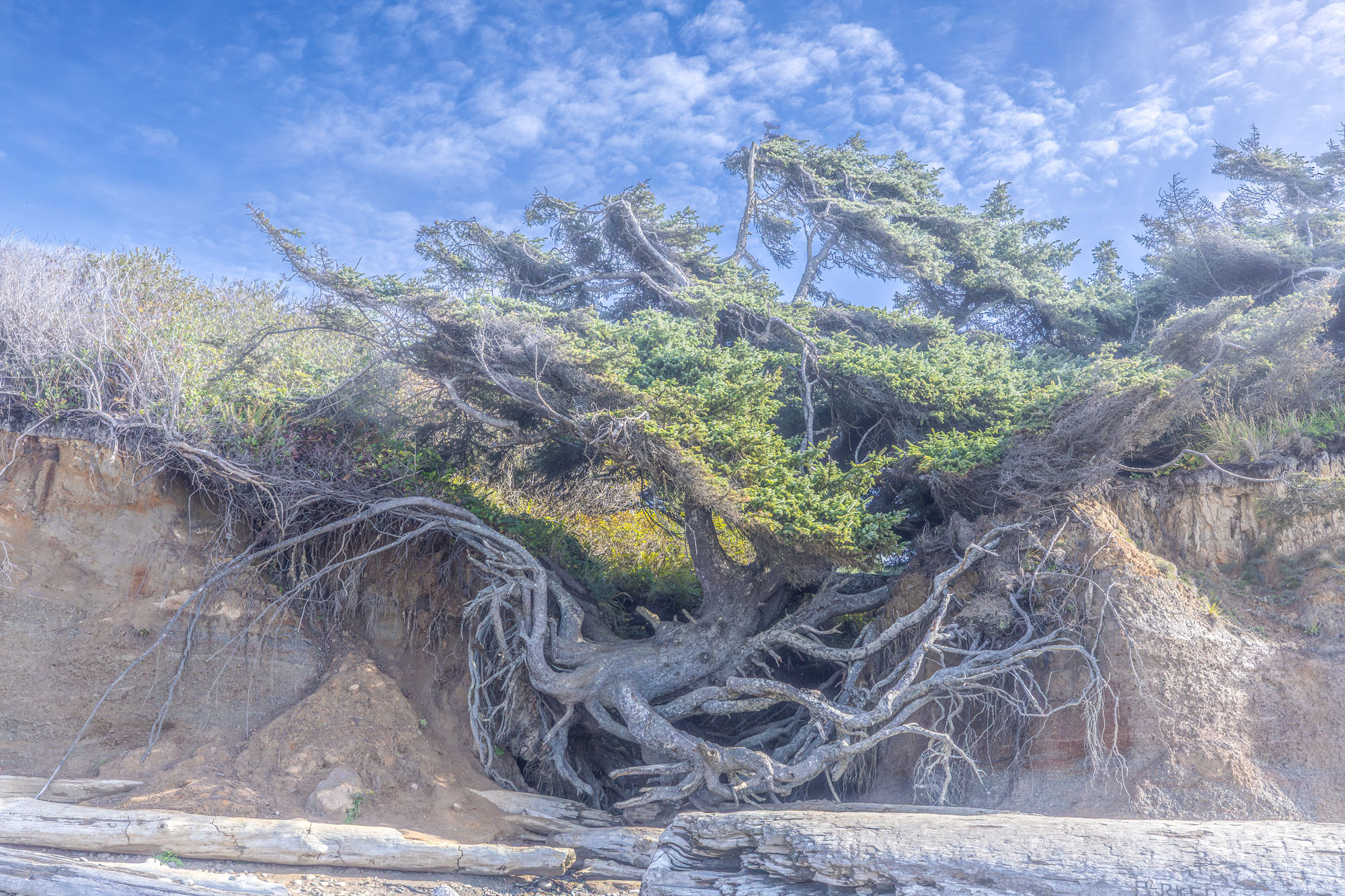
    The Tree of Life is a Sitka spruce on the bluff above Kalaloch Beach in Olympic National Park, just north of Kalaloch Lodge and near the Kalaloch Campground. The opening beneath it is sometimes called the Tree Root Cave. The tree’s roots span the gap, and a small stream runs through the opening toward the beach.

    Kalaloch is one of the most visited areas of Olympic National Park. It sits on the southwest coast of the Olympic Peninsula and is reached directly from Highway 101.

    Why the ground beneath the tree is disappearing

    Visitors often describe the Tree of Life as a symbol of resilience. The tree has earned that. But the opening beneath it tells a second story, about change on this coastline.

    The gap was not carved by the ocean alone. According to National Parks Traveler, a culvert built above the tree in the 1960s to supply the nearby campground sent runoff toward it, and later efforts to stabilize the bluffs added to the erosion around it.

    In early January 2025, storm surge and runoff enlarged the cave, and the tree dropped about five feet. People had once been able to stand beneath the roots. Afterward, the base of the tree sat near the bottom of the cave, partly resting on logs the tides had pushed in. The park has said it will let nature take its course rather than prop the tree up.

    The bluffs around the tree are moving too. Ian Miller, a coastal hazards specialist with Washington Sea Grant, told The Daily World that over a decade of his measurements, bluffs north of Kalaloch Creek retreated a few inches a year, while those south of the creek, closer to the lodge, retreated as much as 3.5 feet a year.

    That is the part of the story the word “resilience” leaves out. The tree has held on. The ground beneath it has not.

    Visiting the Tree of Life: what to know before you go

    Check current conditions first. The tree has changed repeatedly, so don’t plan around anyone’s photographs, including mine. Call Olympic National Park at 360-565-3130 before you make the drive.

    Check the tides. The National Park Service advises checking tides before hiking this coast, because some areas become impassable at high tide. Current tide charts are available at the Kalaloch Information Station.

    Plan your camping early. Kalaloch Campground is open year-round with 175 sites and fills quickly in summer, so reserve as early as possible through Recreation.gov. South Beach, just to the south, has about 50 sites and is open from Memorial Day to late September.

    Make a day of it. The Hoh Rain Forest is about a 45-minute drive north of Kalaloch, and Ruby Beach is nearby as well.

    Give the tree space. Stay off the roots and the bluff edge. The ground there is already failing, and climbing adds to the problem.

    How to photograph the Tree of Life

    A familiar landmark raises a practical question for any photographer: how do you make an image that isn’t the one everyone already has?

    My advice works at any famous location. First, make the photograph of the detail people came to see. Then step back and make one that shows where it is and what is happening around it. At Kalaloch, keeping the bluff and beach in the frame tells the fuller story of a tree on a changing coast.

    My current photography kit includes a Canon EOS R6 Mark II, an RF 15-35mm f/2.8, and an RF 70-200mm f/2.8. The wide lens gives me room to show the tree within its surroundings, and the telephoto isolates root and bluff details from a respectful distance. These are my recommended starting points for a visit today, not the settings behind my magazine photographs:

    Wide views of the tree and coastline: Start at f/8. That keeps both the nearby roots and the distant shoreline sharp. Focus about a third of the way into the scene, and watch the corners of the frame, where wide lenses stretch anything close.

    Root and bluff details: Start between f/5.6 and f/8 with the telephoto. Use f/5.6 to isolate a single root against a softer background, and move toward f/8 when several layers need to be sharp.

    Shutter speed and ISO: Set these by the light, the wind, and what you want the water to do. For sharp handheld frames, use 1/125 or faster on the wide lens and 1/250 or faster at 200mm. Freeze waves and spray at 1/500 or faster. For softened surf, use a tripod and a shutter speed between 1/4 second and 2 seconds, usually with a neutral density filter in daylight. Start at ISO 100 and raise it whenever you need a faster shutter speed. A sharp photograph at a higher ISO beats a blurred one at base ISO.

    Protect your highlights. The opening beneath the tree is often much darker than the sky and surf behind it. Bright sky and white water lose detail permanently when overexposed, so turn on your camera’s highlight warning. When the contrast is too great for one frame, bracket several exposures from a tripod and blend them later.

    Welcome the overcast. Soft, cloudy light is common on this coast, and it reveals the texture of roots and soil without harsh shadows.

    Protect your gear. Use a lens hood in rain and spray, carry a microfiber cloth, and wipe your equipment down after each day on the beach. Salt spray dries into a haze that ruins sharpness.

    Tree of Life, Kalaloch Beach. Available as a high-resolution digital download in the Cedar & Shore Studio shop.

    From the coast to CM Digital Artist Magazine

    After the trip, I reviewed my photographs and researched the tree and its changing setting. I wrote “The Tree of Life” and submitted it with my images to CM Digital Artist Magazine, an art and photography magazine focused on the Olympic Peninsula. The magazine published the four-page feature in its Fall 2025 issue.

    The digital edition is free to read: Read “The Tree of Life” in CM Digital Artist Magazine, beginning on page 40.

    A photograph of one moment

    A photograph records how the Tree of Life stood at one moment. It cannot promise the same view will be there on the next visit. That is the best reason to go: not to collect the famous image, but to see a coastline in motion and photograph it honestly while you can.

    All photographs © Tom Buscher / Cedar & Shore Studio.

    Let’s Create Something Together

    If this story speaks to you, I’d love to connect. To begin your own creative journey.

    Learn More About the Tree of Life

    You can read more about the Tree of Life in Washington State on Visit Olympic Peninsula or explore its location near Kalaloch Beach in Olympic National Park via NPS.gov.

error: Content is protected !!