An encounter in Everett and a $137.75 fill-up in Kingston put Washington’s gas prices into perspective.
By Tom Buscher
“I suck at life, not worth a dollar.”
I saw those words on a man’s sign in Everett on Saturday. He stood near a gas station charging $5.49 a gallon for regular. The contrast stayed with me long after I left Rucker Avenue.
That night in Kingston, I watched the total climb on a gas pump until it stopped at $137.75. The truck had taken 25.050 gallons.
Washington’s minimum wage is $17.13 an hour. Eight hours at that rate pays $137.04 before taxes, already 71 cents short of the fill-up. The tank cost more than a full shift’s gross pay.
I know a single tank is not everyone’s weekly expense. But transportation is part of how people earn a living, and its cost is paid before they can use that paycheck for anything else.
What a gallon costs in minutes of work
Across Washington, regular gas averaged $5.56 a gallon on Sept. 19, according to AAA figures checked that day. A year earlier, it averaged about $4.64. At the state minimum wage, a gallon now costs nearly 20 minutes of work, compared with about 17 minutes last year. A 25-gallon purchase costs roughly $23 more.
A week of logged shifts totaling 96.23 hours. What those hours buy, and what they cost, is the subject of The Hours We Give.
Crude oil, refining, taxes and distribution all contribute to the price at the pump, according to the U.S. Energy Information Administration. Washington’s state and federal fuel taxes together account for 74.9 cents a gallon, after the state tax rose to 56.5 cents on July 1. The EIA’s September outlook expects constraints on Middle East oil exports to persist through the end of the year.
Beyond one tank of gas
The pressure extends beyond one receipt. The Bureau of Labor Statistics reported that gasoline accounted for more than a third of August’s monthly increase in consumer prices. In the Federal Reserve’s 2025 survey, 63% of adults said they would cover a hypothetical $400 emergency entirely with cash, savings or a credit card paid off at the next statement. That survey was taken before this September’s prices.
Knowing where the money goes does not make finding $137.75 any easier.
Man in Everett holds a sign reading “I suck at life, not worth a dollar” beside a Chevron sign advertising $5.49 gas.
I keep coming back to the sign in Everett. I drove away from Rucker Avenue, but “not worth a dollar” followed me to Kingston. By the end of the night, I knew exactly what a tank of gas had cost.
Captivating Photography
Keep local coverage going
No paywall here and no ads. This site runs on the store. If this post was worth your time, spend a minute in the shop.
A volunteer-run workshop in Carlsborg, a beach near Sequim, and the members who teach each other how to turn a found stone into finished work.
By Tom Buscher
I went to the Clallam County Gem and Mineral Association’s workshop in Carlsborg on Aug. 20 to find out what happens after somebody carries a promising stone home.
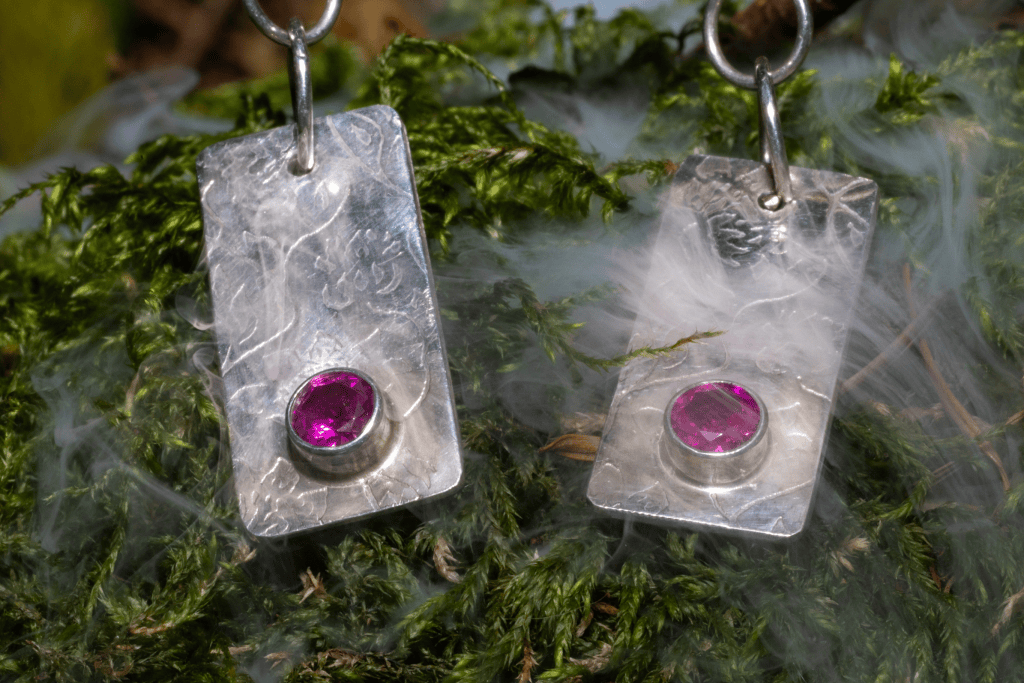
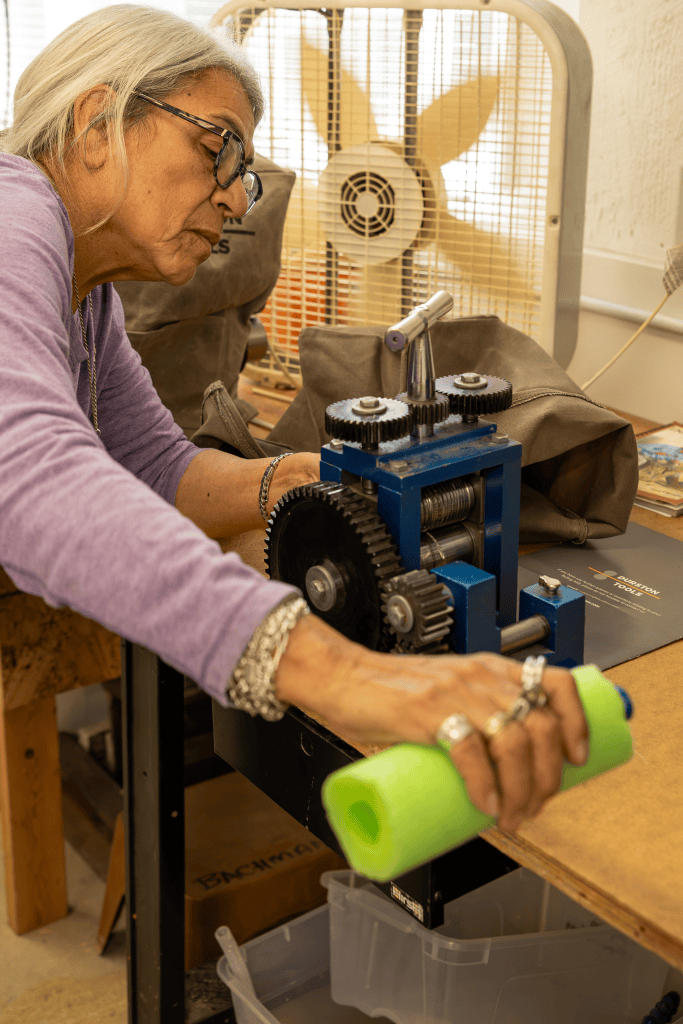
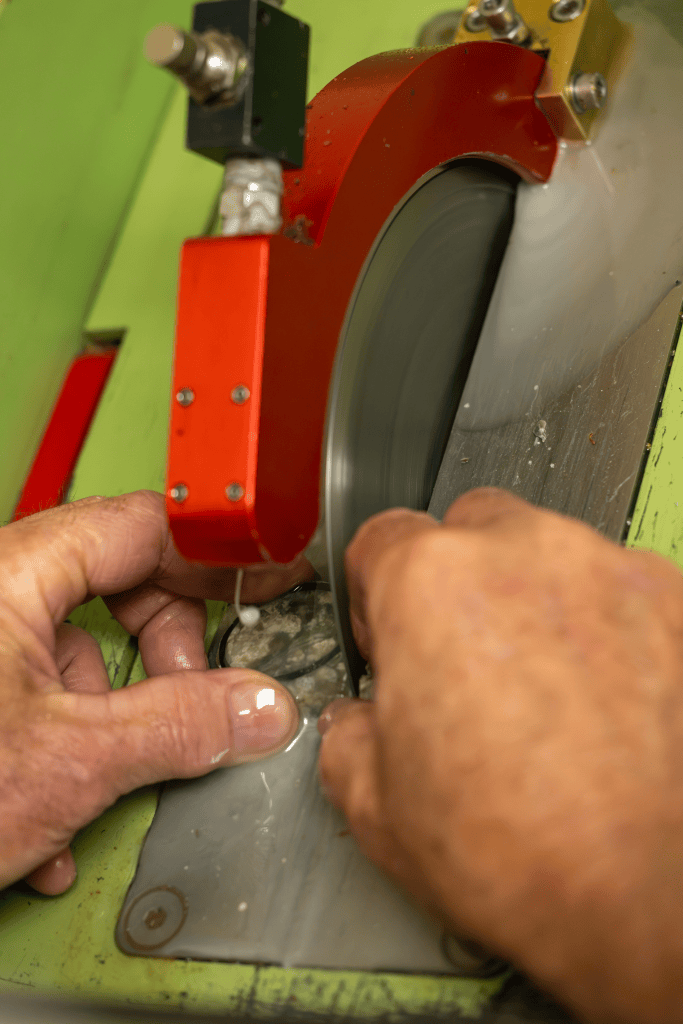
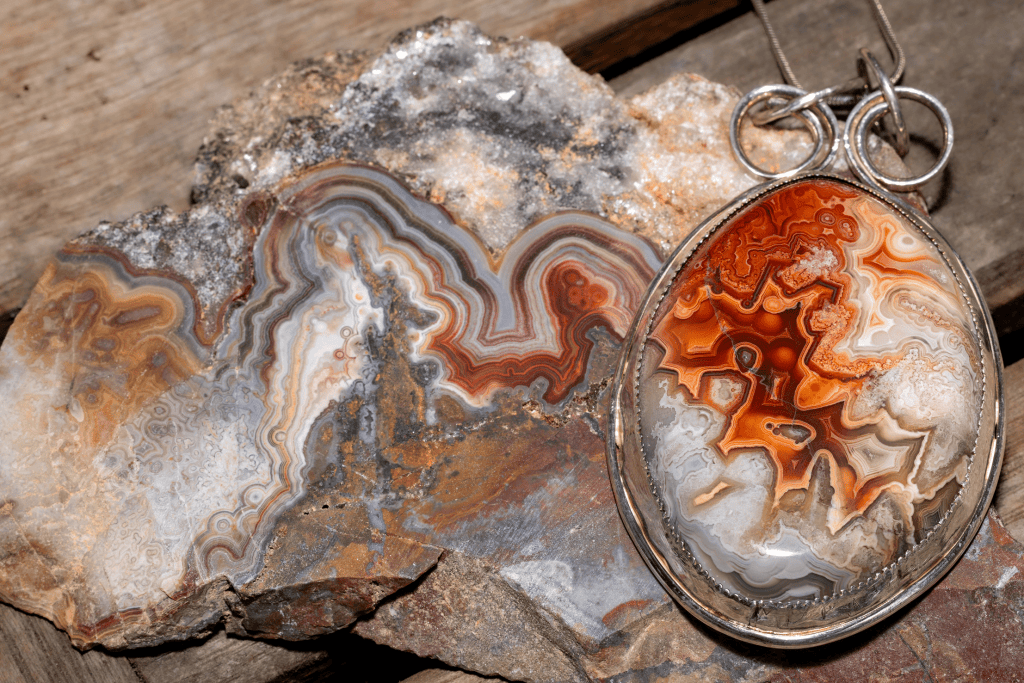
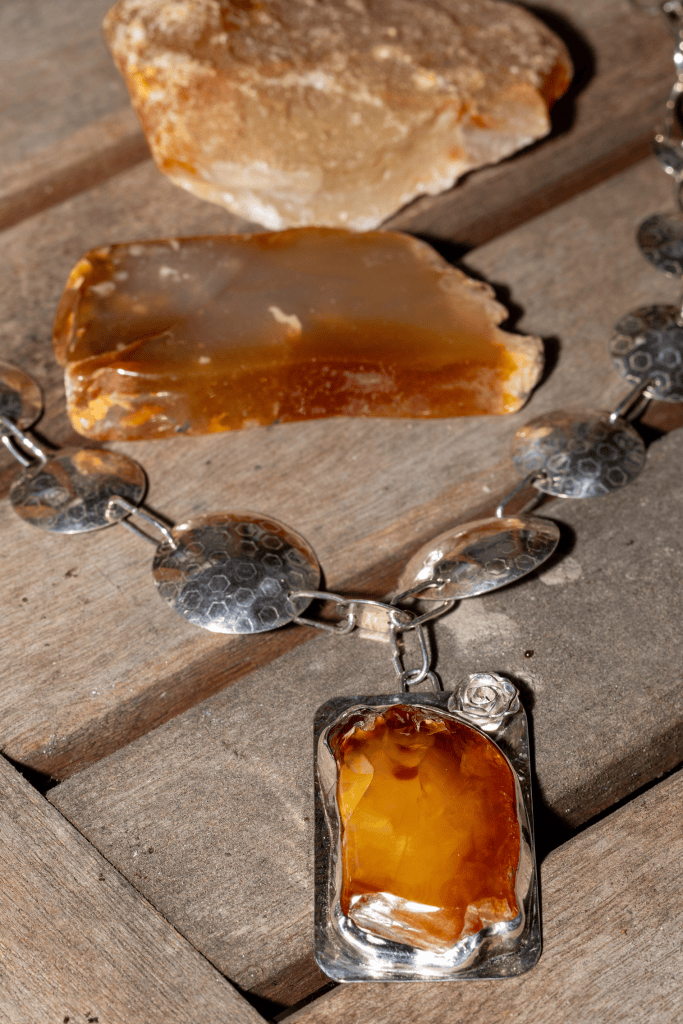
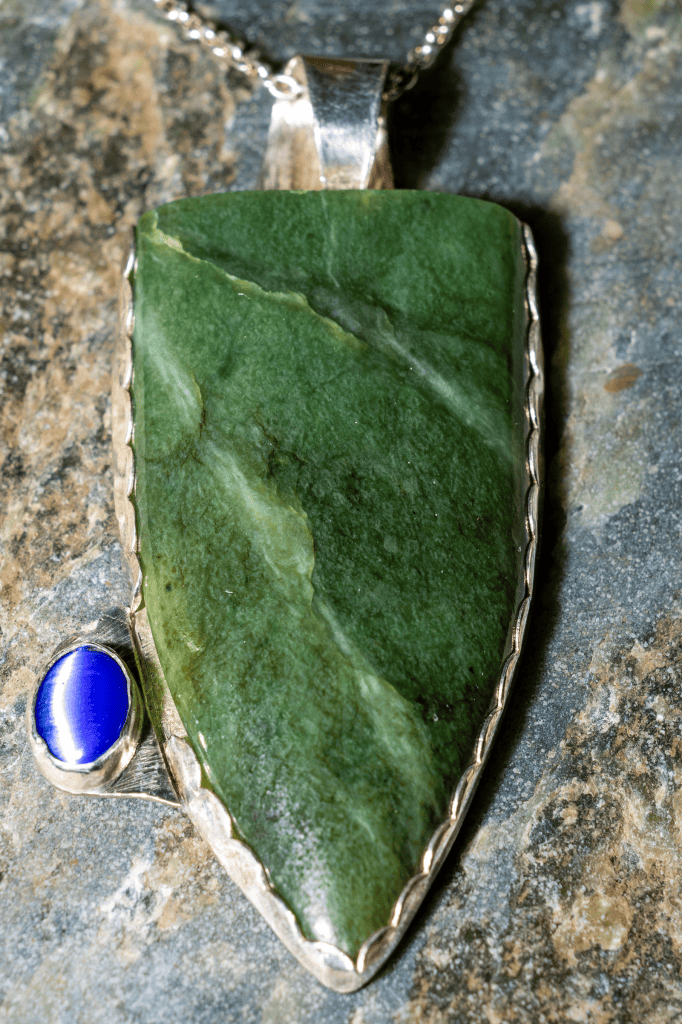
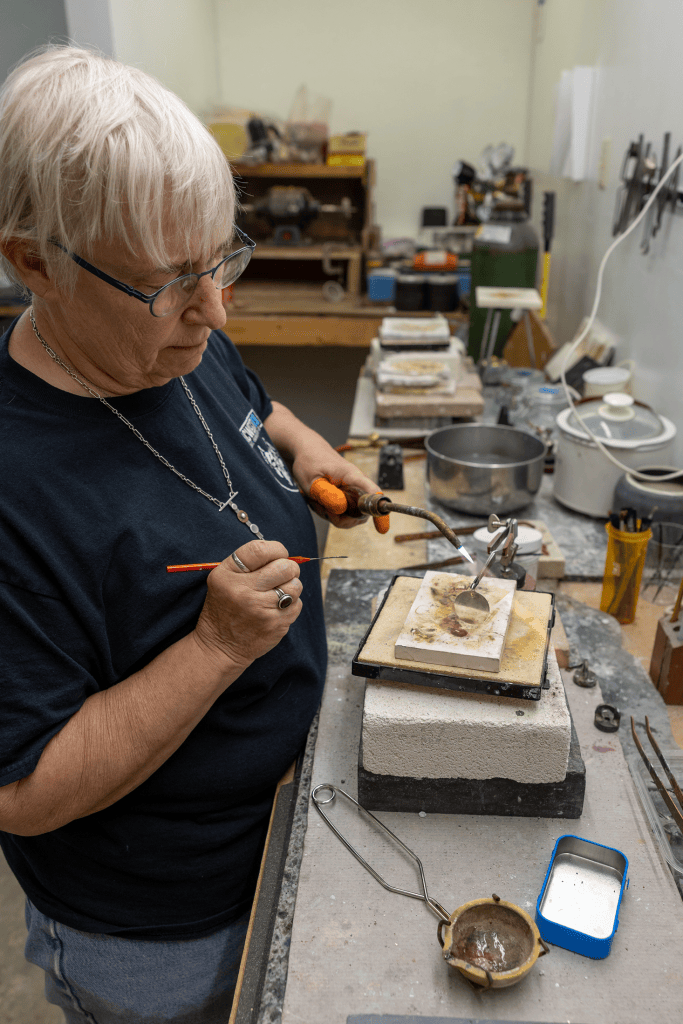
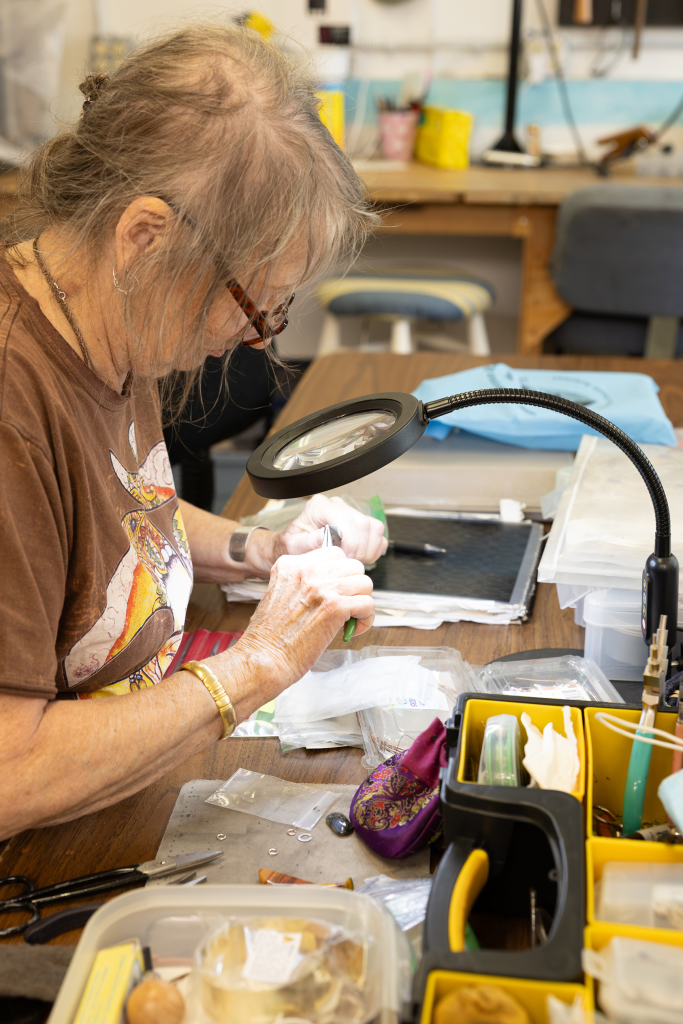
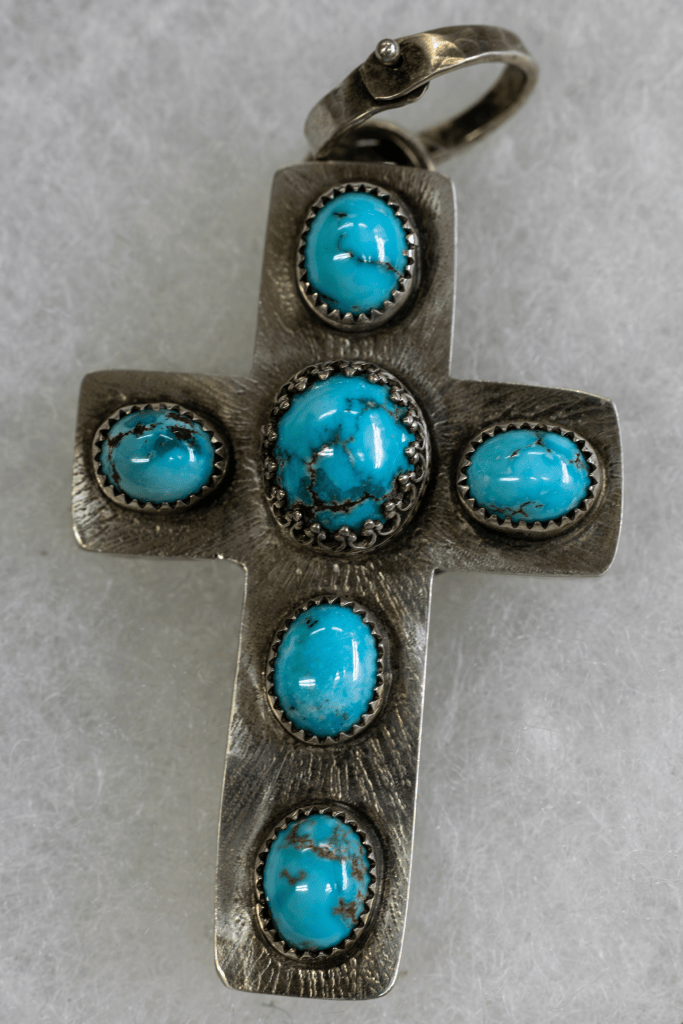
The equipment was the obvious answer. About 10 saws, five grinding machines, and the specialized tools members use to cut, shape and polish stone. Down the hall, a silversmithing room where finished cabochons become pendants and rings.
But the machines only explain the mechanics. They do not explain how anyone comes to know what to do with them. Nobody walks in able to read a rough stone, choose a cut or hold a torch steady. Those skills have to be learned, and association members volunteer their time to teach them.
Learning in the workshop
Chuck Hagood is a retired firefighter with a mechanical background. He joined after his wife did. She arrived having never soldered or worked metal and learned it through the club. He drifted toward the machinery instead, took over much of its upkeep, and later taught beginning lapidary himself.
That upkeep is substantial. Some equipment was donated. Volunteers have also rebuilt machines, adapted newer components, constructed water systems and fabricated replacements for parts that are no longer manufactured. Hagood showed me a saw whose mounting assembly had to be welded, relocated and realigned before a replacement part would fit. He said the volunteers save and reuse whatever they can, down to hardware.
“It’s amazing what we get done with nothing,” he said.
None of it is cosmetic. The machines have to be reliable enough to cut stone and safe enough for someone using them for the first time.
Operating the machines is only part of the work. Members must also learn how the material in front of them is likely to respond. Hardness, fractures, color and contrast all bear on whether a stone can be worked and how it should be approached, and none of that is obvious to a beginner.
“Lapidary skills just aren’t an overnight, quick result,” Hagood said. “It really does take a lot of love and a lot of work.”
What the association provides is a place to put in that work with someone nearby who has already done it.
Taking the lesson to the beach
A week later, on Aug. 27, I met Brandon Stimple at Port Williams Beach near Sequim. Other visitors were also searching for stones nearby.
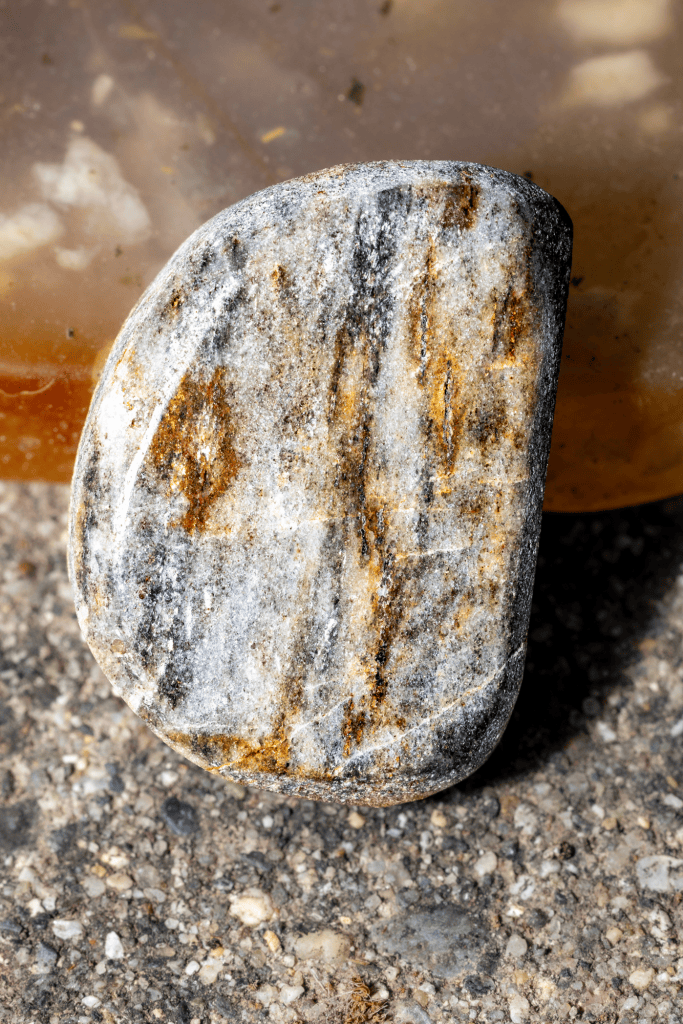
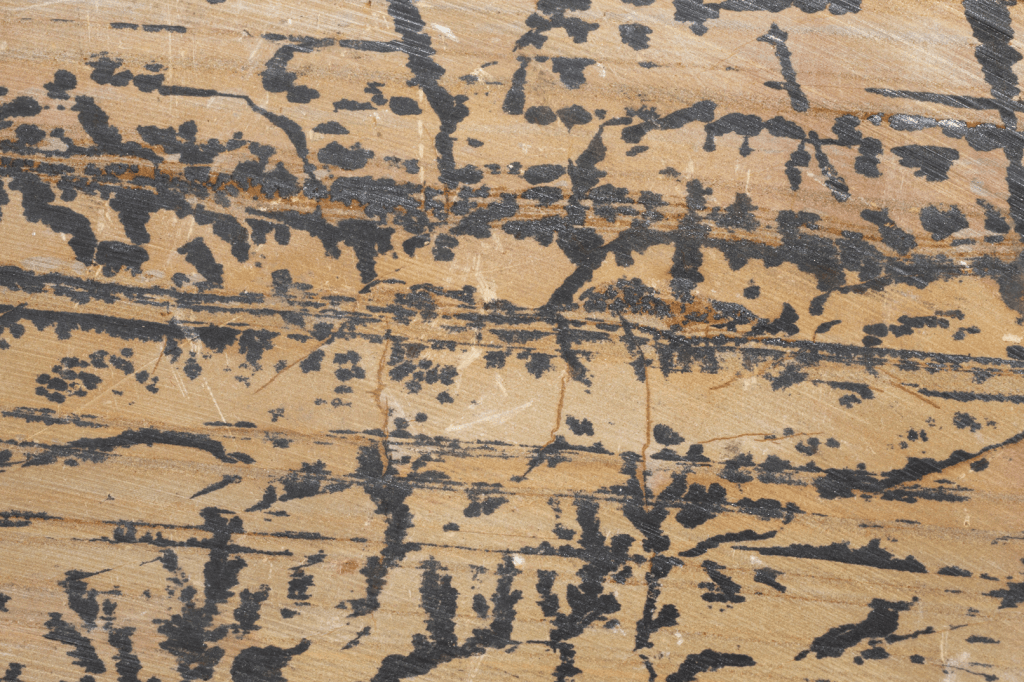
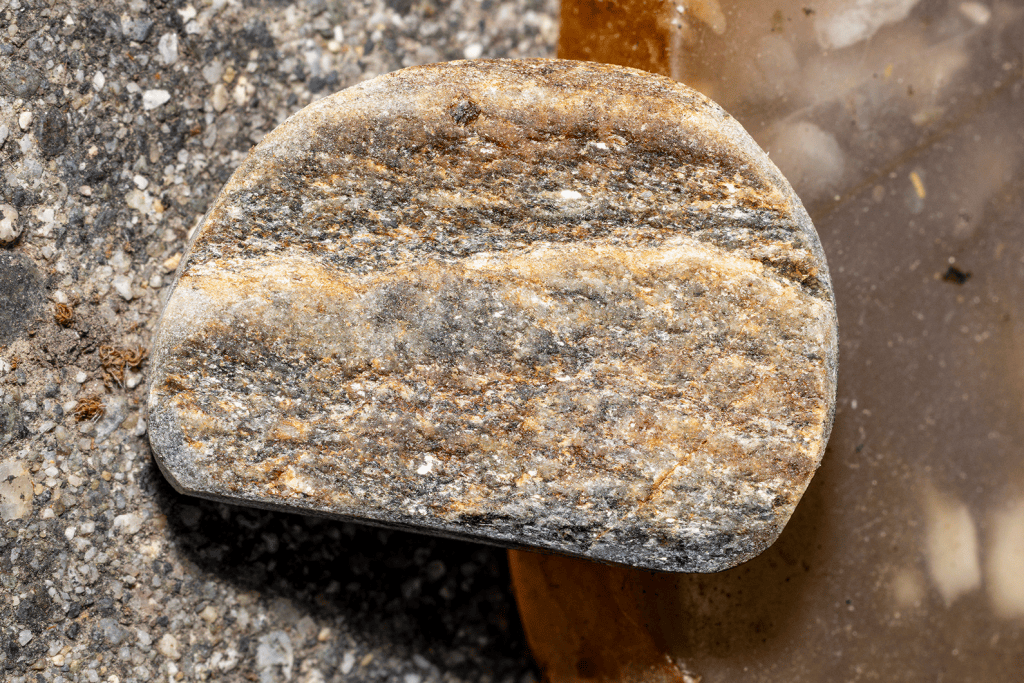
Stimple picked up a common gray stone, weathered, with areas of contrast across the outside.
He drew a utility knife across it and left a visible scratch. Stimple read that as evidence the stone sat below quartz, which ranks seven on the Mohs hardness scale. He considered it workable, although he would need to treat it differently from harder material.
Then he explained how he would open it, and that was the part I had not expected.
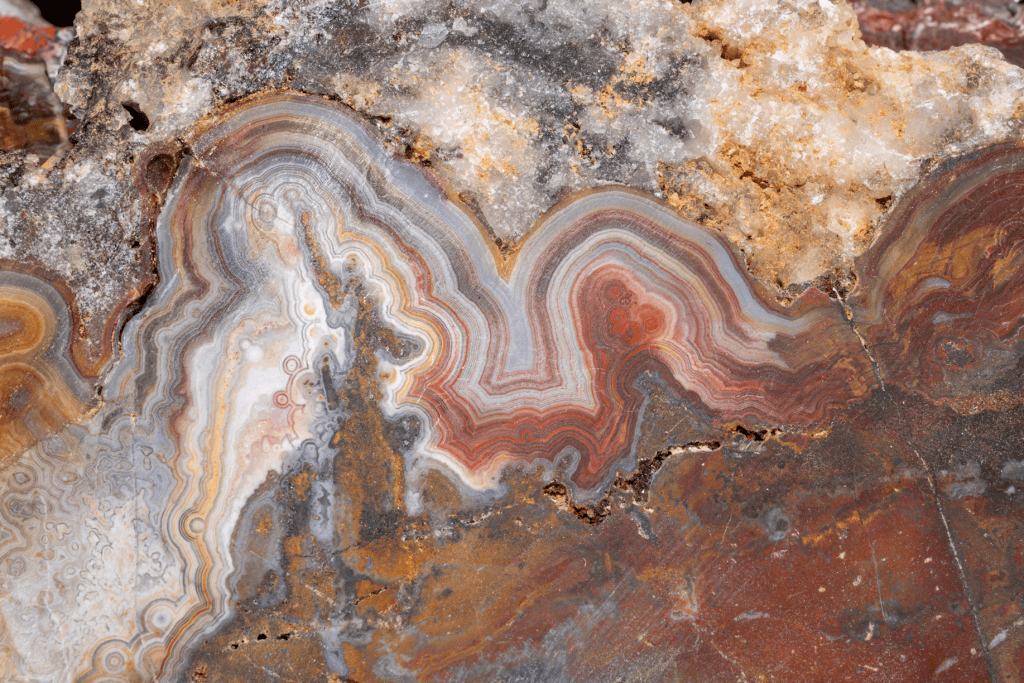
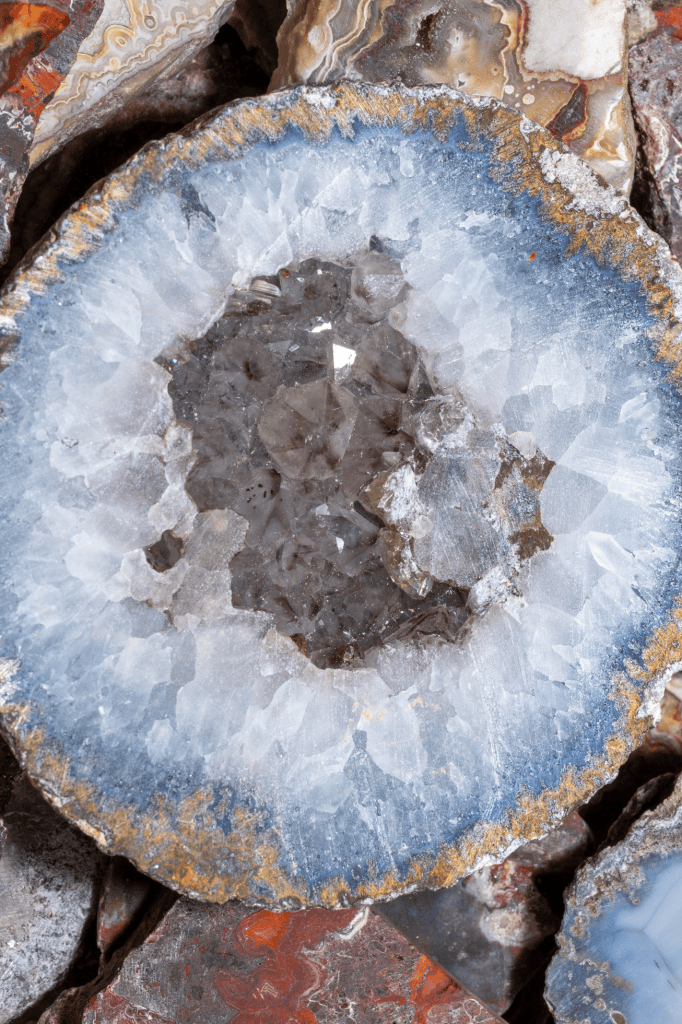
He does not put a stone in a saw and make one decisive cut. He takes a small piece off one edge, then another off a different edge, and reads what those pieces reveal about the direction the material runs inside. A cut that follows the lines can wipe out the pattern. Coming across them at an angle can bring out more of it. The small cuts are how he reads the material before committing to the larger ones.
At the workshop I had seen where members learn to use the equipment. On the beach I was seeing how that instruction informed Stimple’s decisions.
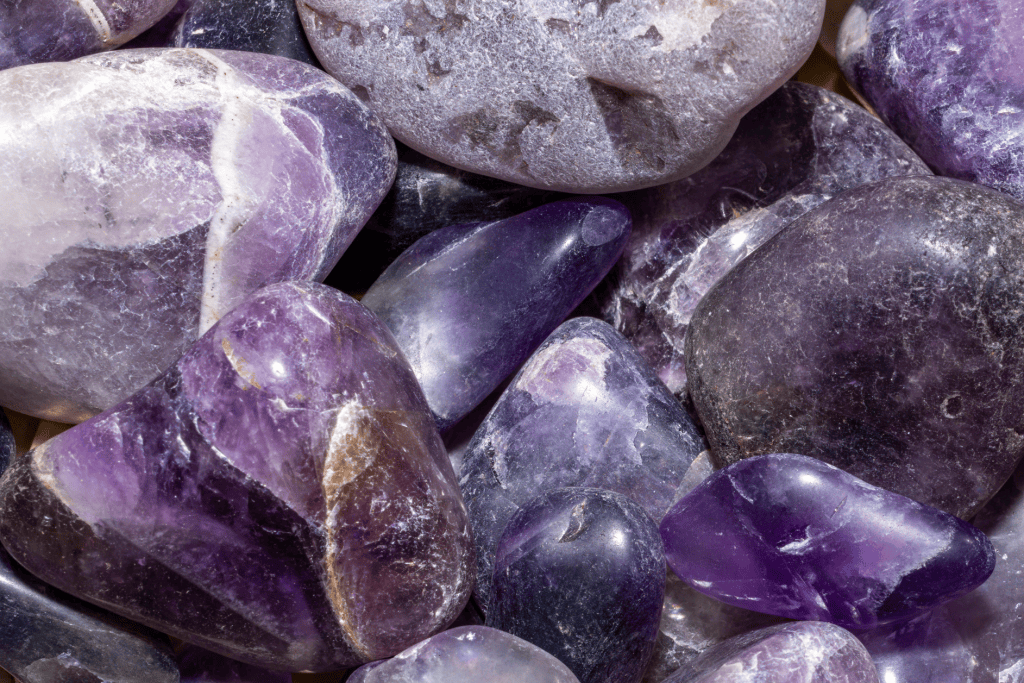
Stimple did not start out with any of it. He and his wife went out to a beach at night with a high-powered light and came back with quartz, because at that stage quartz was what they knew to look for. He joined the association, learned to work stone, and is now the workshop’s head steward. He teaches the lapidary class.
Photographing the process
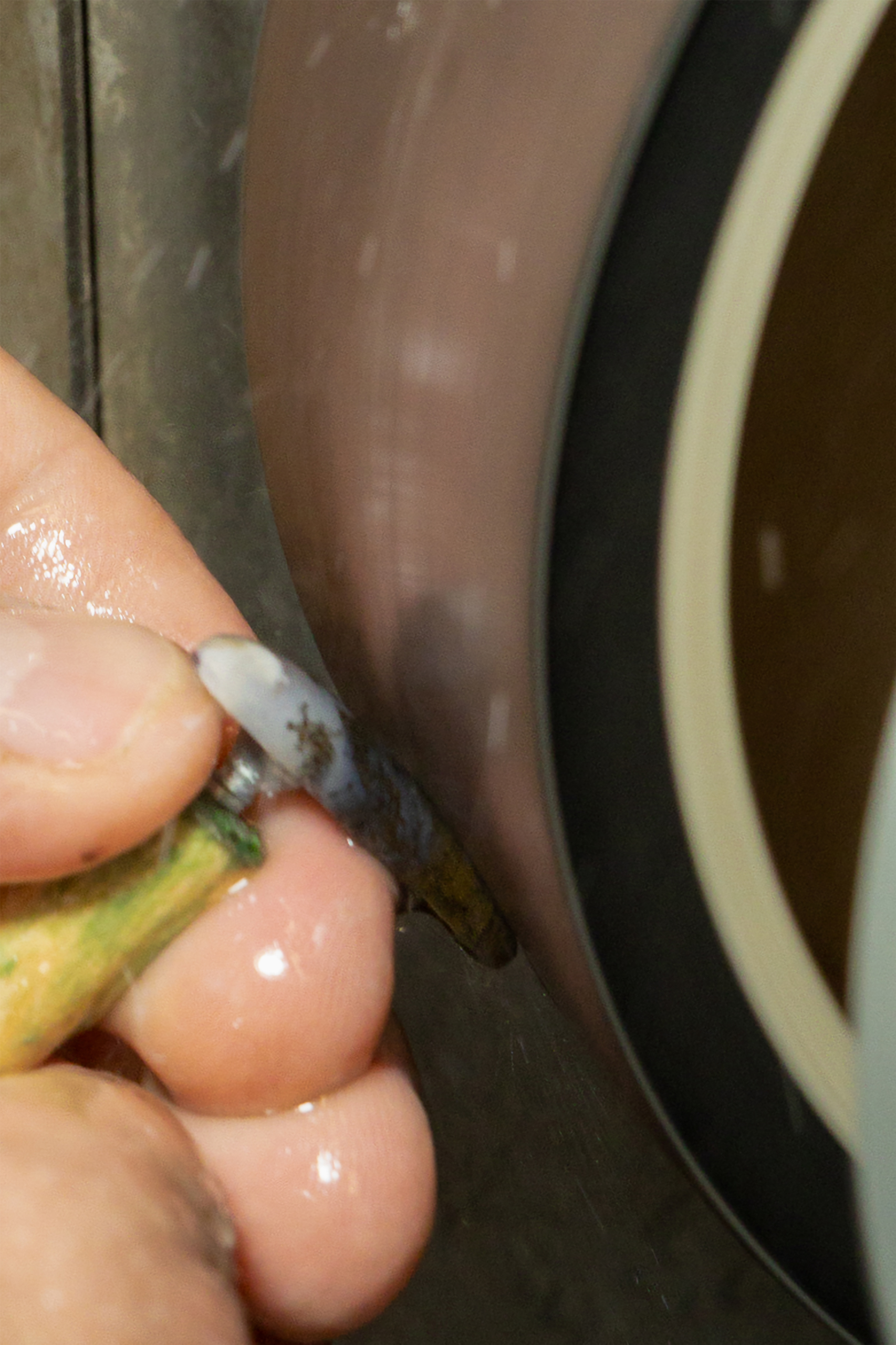
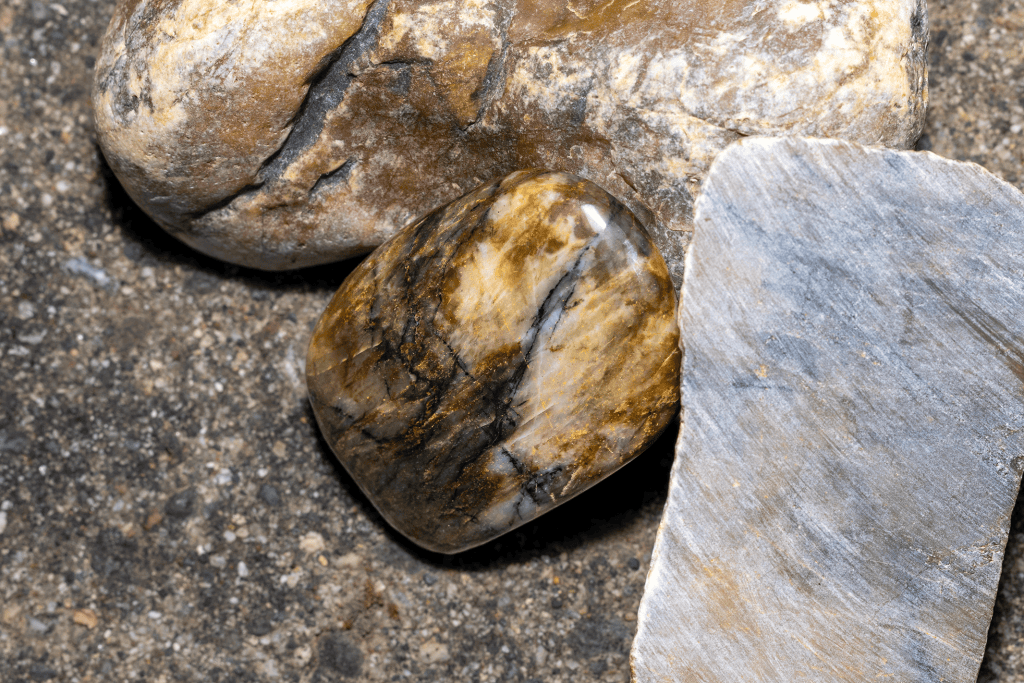
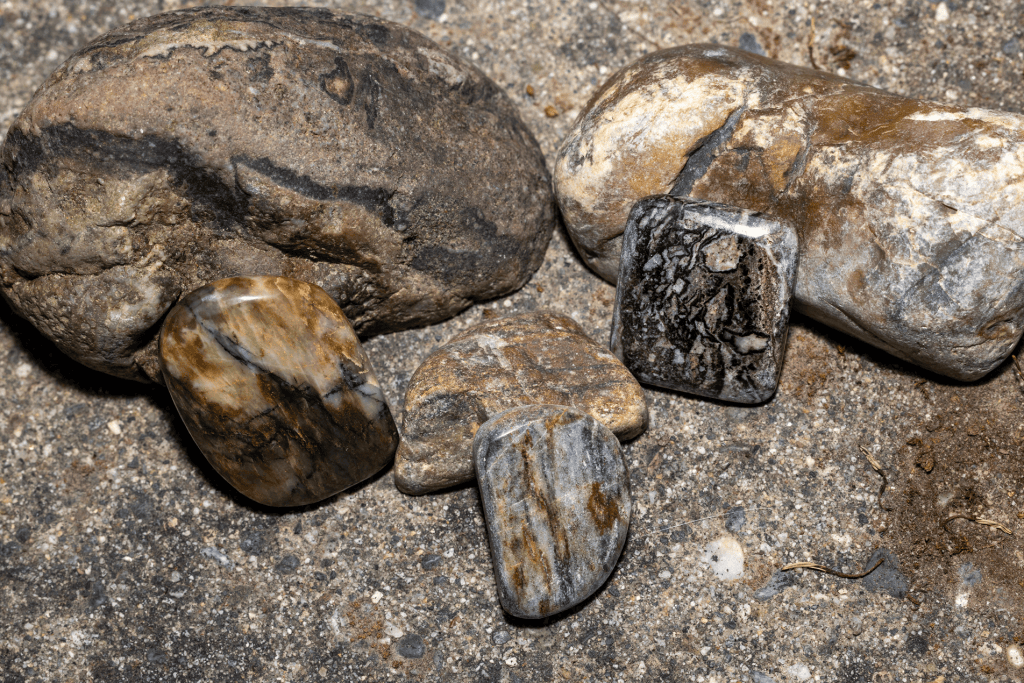
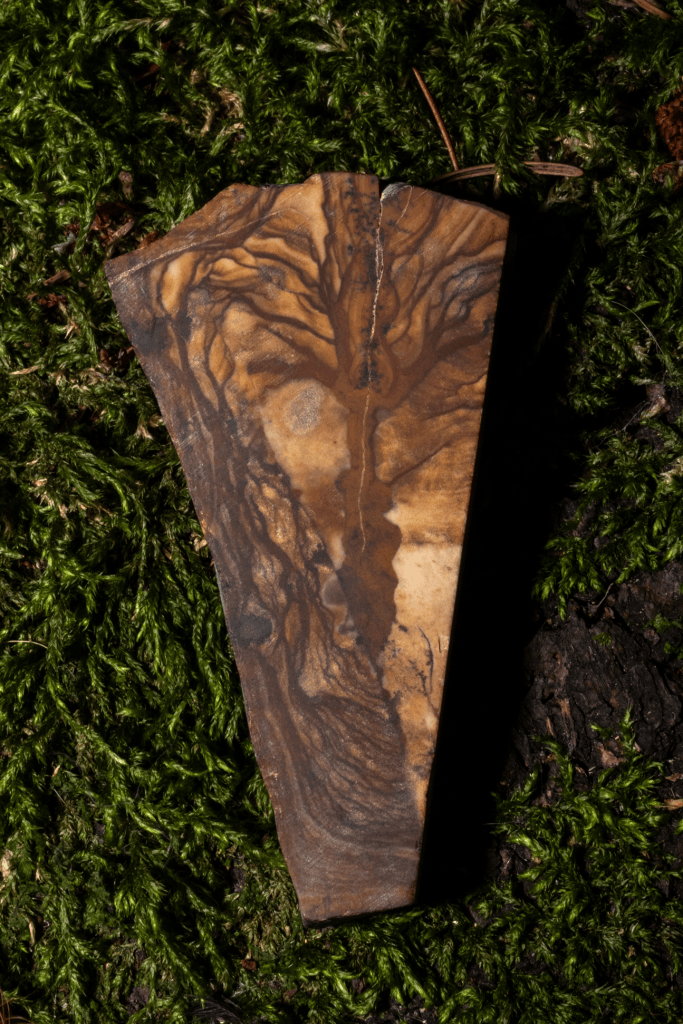
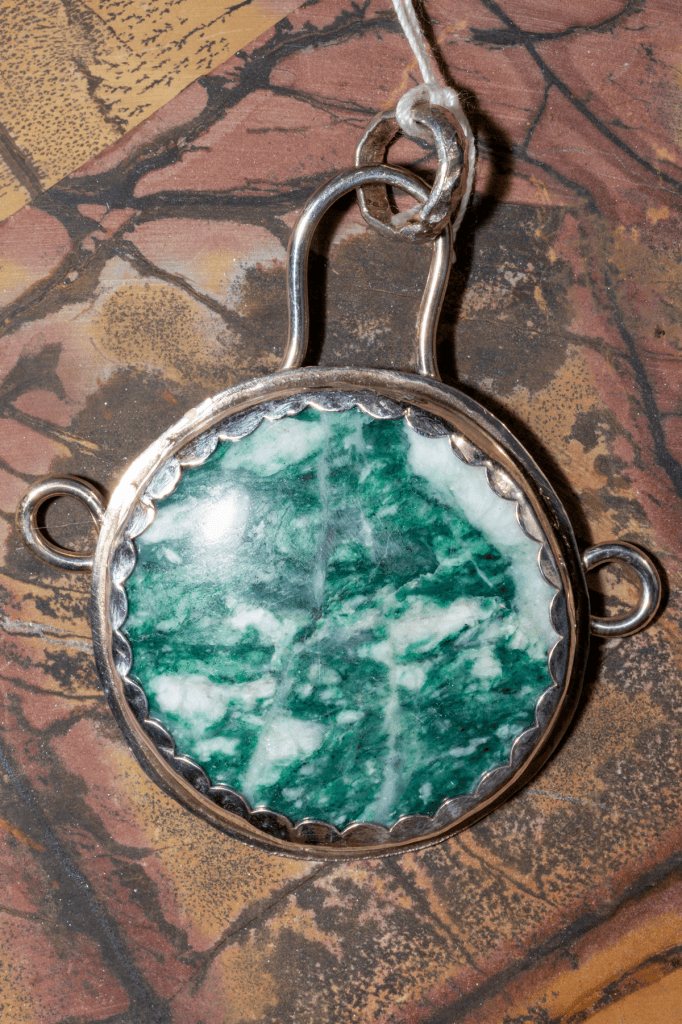
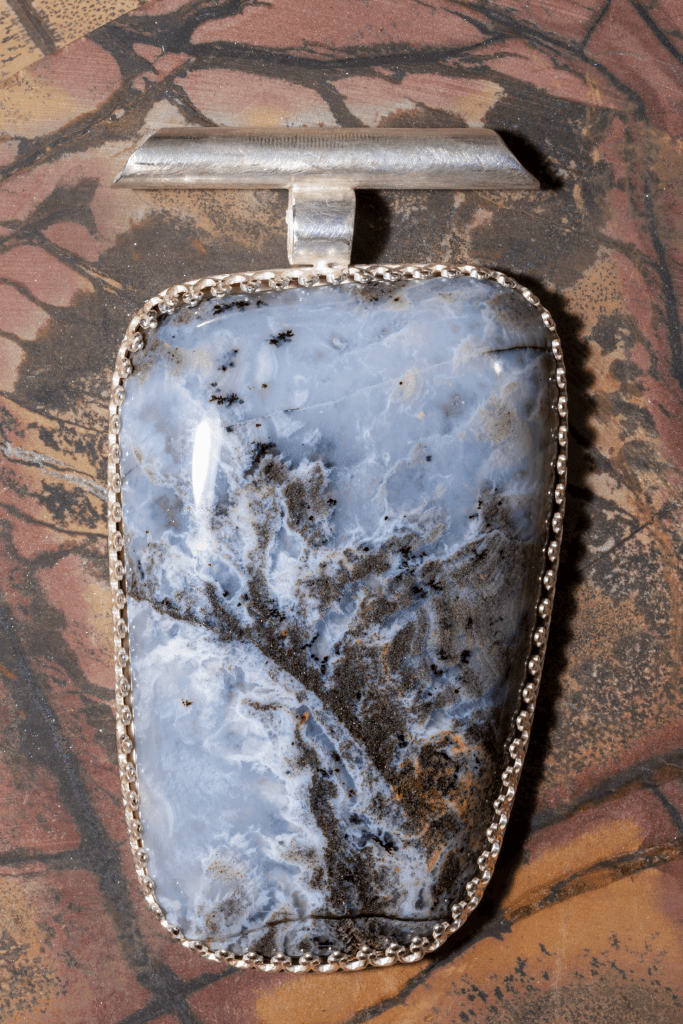
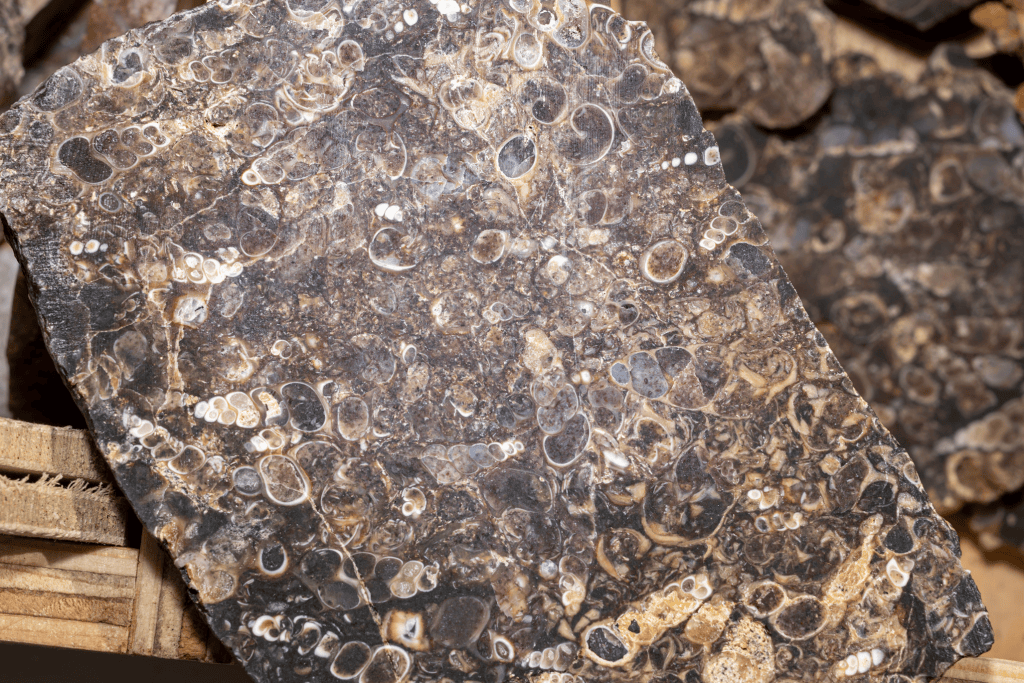
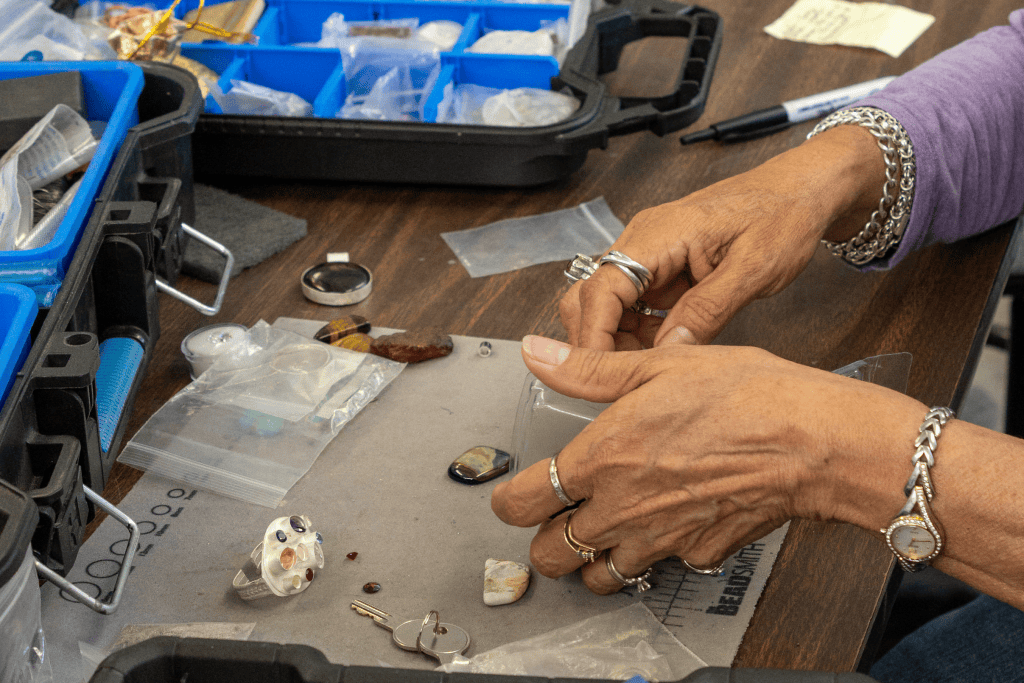
Across the assignment, I photographed several stages of the work, from examining rough material and testing hardness to cutting, grinding and polishing stone in the workshop.
Those photographs documented the work between the stone as it was found and the form it eventually took.
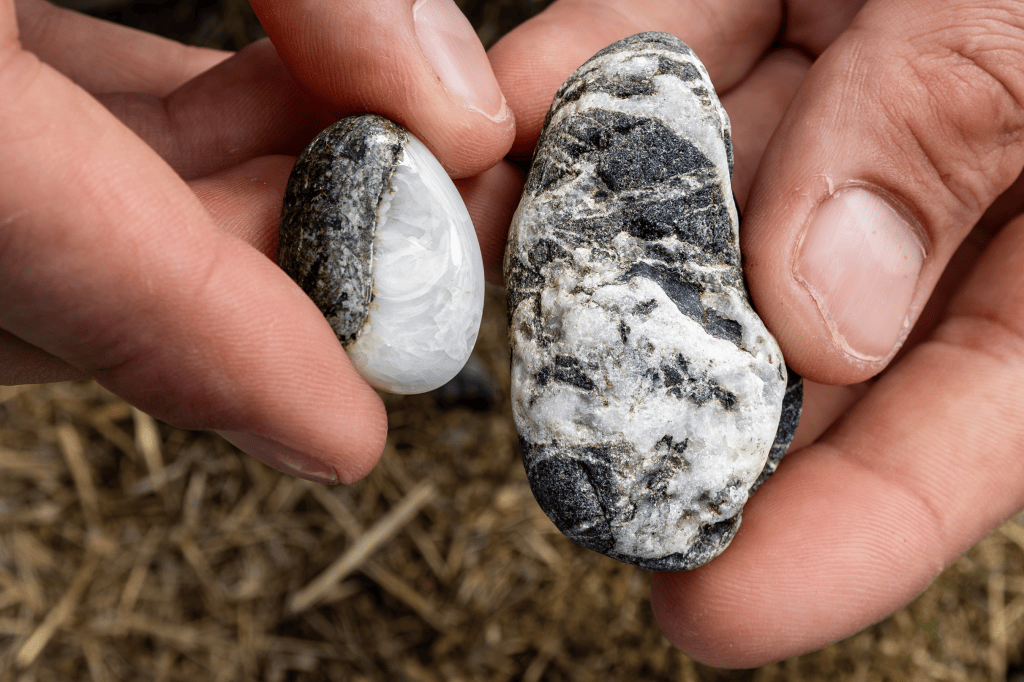
Two days after the beach visit, on Aug. 29, I photographed the result.
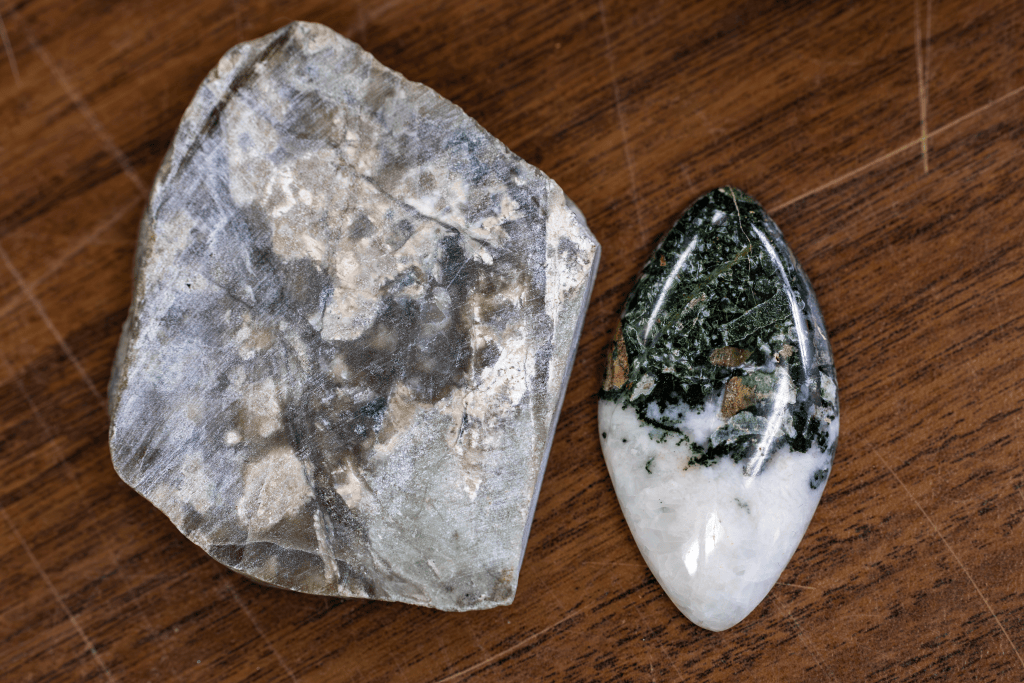
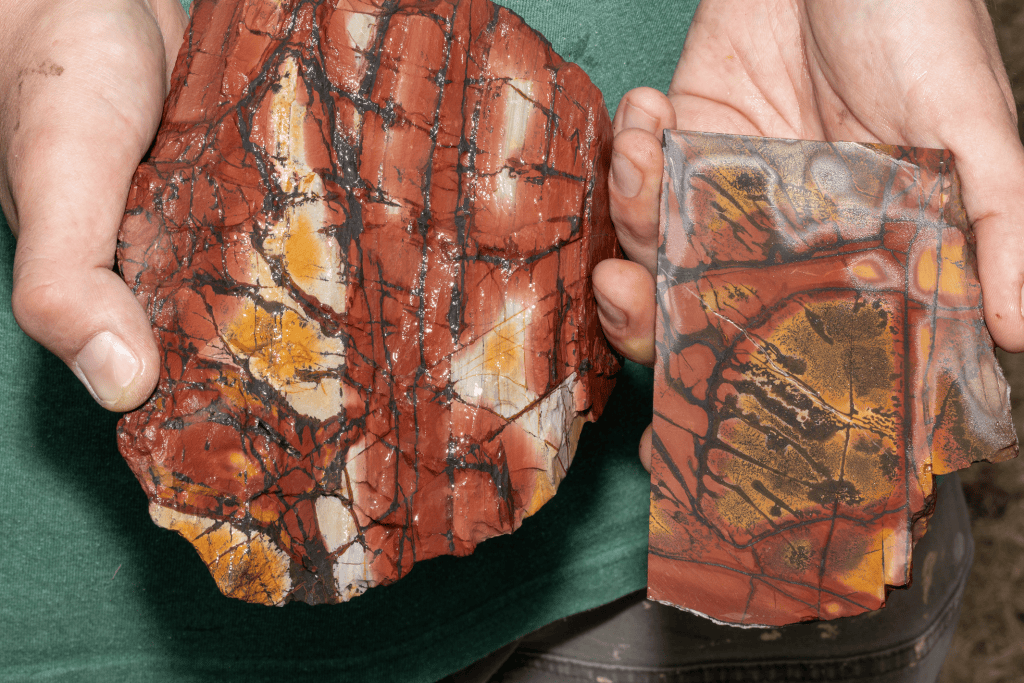
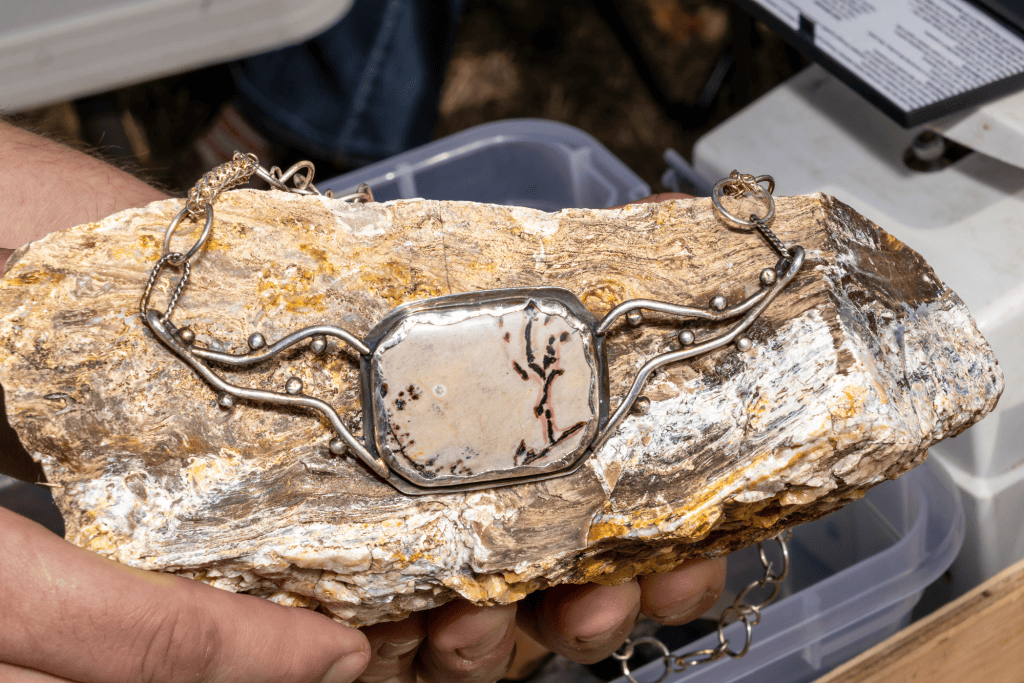
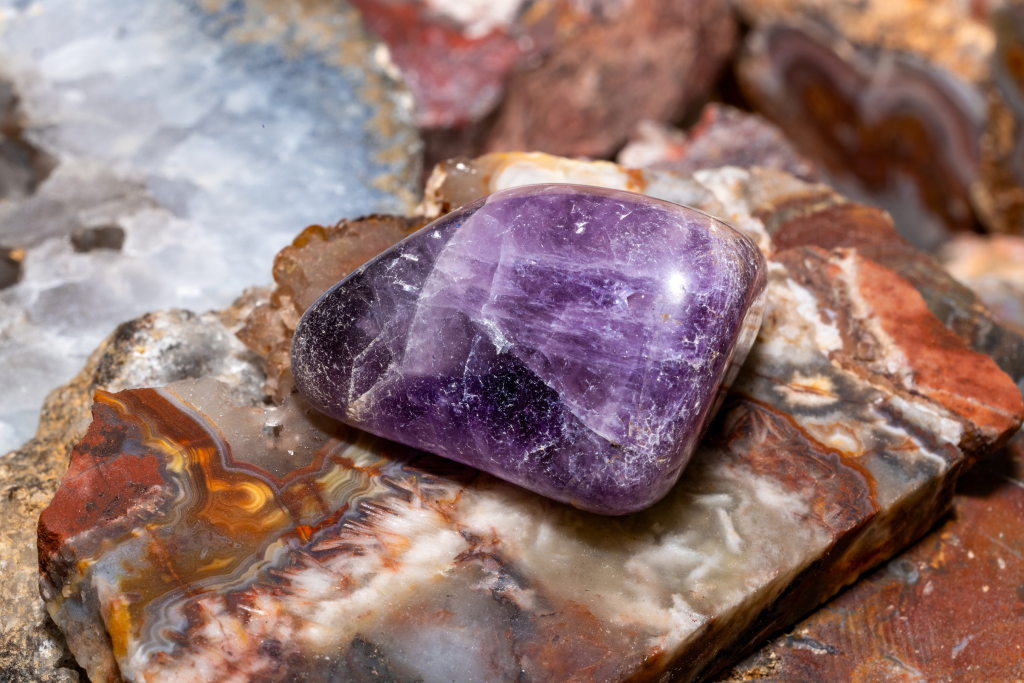
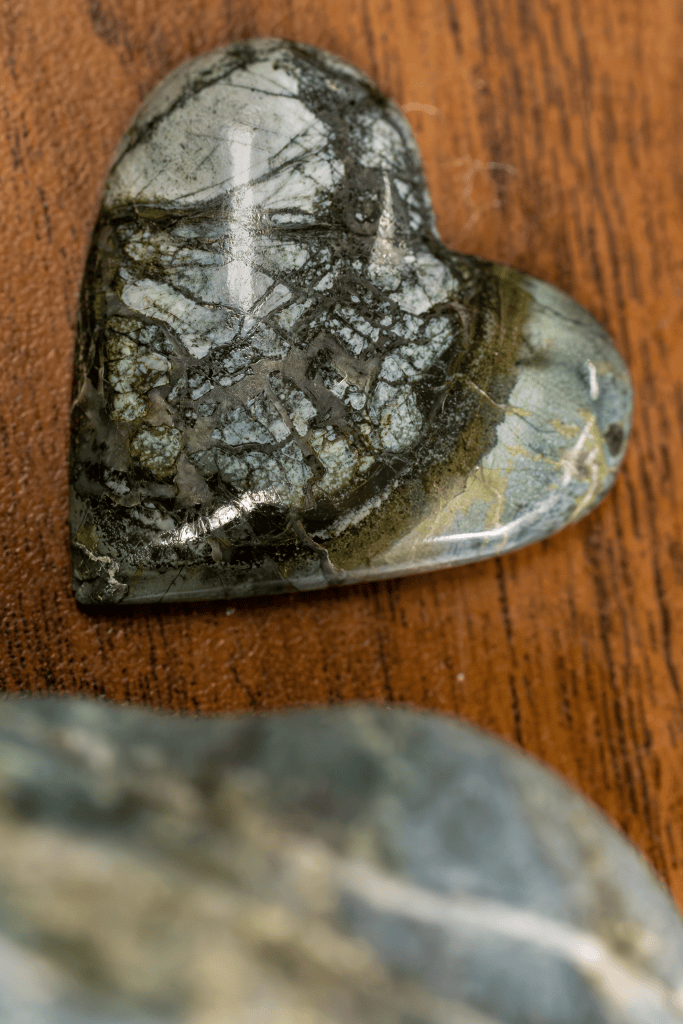
Stimple placed the finished square cabochon beside the unfinished half of the same stone. One photograph showed the source material and finished result together, while the broader series showed the process that connected them.
The equipment made the transformation possible. Knowing how to approach the material came from experience and instruction.
Passing it forward
The association has been on the Olympic Peninsula for roughly 65 years. At the time of my reporting, it had about 100 members, with about 40 participating regularly. Among them are retirees, working professionals, experienced artists and children encountering geology for the first time. Some members keep paying dues without using the shop at all, because the dues help cover the rent.
In the silversmithing program, that transfer of knowledge is being planned deliberately.
Debbie Patapoff teaches silversmithing, and she has been preparing Alexis Nelson to teach other students. Her reason is practical. Patapoff was unavailable for a stretch of months once and there was no one positioned to keep the class going while she was gone.
The association’s junior steward is 15. Stimple trained him. He works in both lapidary and silversmithing and is qualified to supervise the machinery.
Insurance rules keep children under 14 off the main equipment, so the club brings them in through rock tumbling, its Pebble Pups youth program and other activities suited to their age until they are old enough for the larger machines.
That progression matters to an organization facing turnover as longtime members step back from leadership. A curriculum can list the stages of cutting a stone. It cannot supply the person willing to stand at the next machine while someone else learns.
Hagood sees the involvement of different generations as important to the club’s future.
“It’s a good mix, and it’s a good thing,” he said. “It very much is the future of our club.”
Keeping the room open
Teaching needs instructors. It also needs a room, working equipment, and enough income to keep both.
The association holds two rock shows a year at the Vern Burton Community Center. Hagood said revenue from those weekends helps pay the workshop’s rent and operating expenses. Class fees go into the same general fund and help cover utilities, equipment and consumable supplies. Major purchases can take proceeds from more than one show.
How much that income matters became clear during the pandemic. With the shop closed and the shows suspended, two important sources of income disappeared. Hagood said members contributed thousands of dollars to keep the rent paid. Stimple said a government grant also helped the association survive.
“The whole place runs on the good-natured participation of its members,” Hagood said.
That is the clearest description I heard of the association. Its volunteers are not only maintaining machines. They are preserving a place where members can learn the craft, practice it and eventually help teach someone else.
By Tom Buscher | Cedar & Shore Studio | Sequim, Washington
If you are a real estate agent in Sequim, an attorney in Port Angeles, a financial advisor in Port Townsend, or any professional whose clients find you online before they meet you in person, you need a headshot photographer in Sequim, WA, who understands what is at stake. This post was written for you.
Your headshot is not a formality. It is your first sales pitch. For most professionals on the Olympic Peninsula, a weak photograph is quietly costing them business every single day.
Why Your Headshot Is a Business Asset, Not a Vanity Purchase
Research in social psychology consistently shows that people form a judgment about another person in under 100 milliseconds. Before you speak. Before they read your bio. Before they know your credentials or your track record, they see your face and they decide whether you are competent, trustworthy, and approachable.
For professionals whose clients discover them through Google, LinkedIn, a real estate portal, a law firm website, or a Chamber of Commerce directory, that split-second judgment happens through a photograph. Furthermore, a weak photo communicates uncertainty and lack of investment in your own brand, while a strong one communicates authority, confidence, and trust before you say a single word.
According to Why LinkedIn Profile Photos Matter to Employers, profiles with professional photos receive significantly more views and connection requests than those without. In a small, relationship-driven market like Clallam County, that visibility difference translates directly into business.
The professionals who invest in how they present themselves are the ones clients call first.
What Makes a Professional Headshot Worth the Investment
Not all headshots are equal. The difference between a photograph taken by a friend with a phone and a professionally lit, professionally directed portrait session is not just technical. It is strategic, and it is immediately visible to anyone evaluating your profile.
A professional headshot session done correctly accounts for several interconnected elements.
Lighting: The difference between flat, unflattering light and professionally sculpted studio light is immediately visible to anyone looking at your image, even if they cannot articulate why. Professional strobe lighting, octabox softboxes, and reflectors shape light the way a painter uses shadow and highlight, revealing confidence and dimension rather than washing it out.
Direction: is equally critical. Because most people are uncomfortable in front of a camera, a skilled photographer knows how to create an environment where that discomfort dissolves. Coaching posture, guiding expression, and reading the moment when the subject is genuinely at ease are skills that separate a professional session from a snapshot.
Equipment: matters at the delivery stage. A Canon R6 II with professional L-series glass renders detail, color, and depth in a way that consumer cameras cannot match. When your headshot is displayed at full size on a monitor, printed on a banner, or used in a publication, that difference becomes visible.
Editing: completes the image. Natural-look files preserve authenticity while removing distractions. Premium retouching brings out the best version of what the camera captured, without creating a result that looks artificial or processed.
Why On-Location Headshots Work Better for Olympic Peninsula Professionals
Most photography studios require you to travel to them, sit under unfamiliar lights, and perform in an environment that feels clinical and foreign. As a result, the images often look exactly like that.
Cedar & Shore Studio works differently. Every session is on-location, meaning your office, your listing, or any setting that reflects your professional environment and personal brand. Because you are on familiar ground, that comfort shows in the images.
In addition to working in your space, every Cedar & Shore Studio session has the option to include a full professional studio setup delivered directly to your location. That means Godox AD600 Pro II professional strobes, 48-inch octabox softboxes, a Westcott Eyelighter 3 for refined catchlight and dimension, and a choice of backdrop color or natural setting. Commercial studio quality, brought to Sequim, Port Angeles, Port Townsend, and across the Olympic Peninsula.
Every session includes a 4K on-site monitor review. Before packing up, you sit down and view your images at full resolution, selecting your favorites on the spot. No waiting on a gallery and hoping you like what arrives. Natural look images are delivered the same day.
Who Needs a Professional Headshot Photographer in Sequim, WA?
The short answer is any professional whose clients form an opinion of them before they meet in person. However, certain professional categories on the Olympic Peninsula have the most to gain.
Real estate agents and brokers. Your face is on your yard signs, business cards, listing portals, social media, and agency website. It is the most visible personal marketing asset in your business. An outdated or low-quality photo sends a message about the standard of service a client can expect, while a strong headshot sends a different message entirely.
Attorneys and legal professionals. Trust is the foundation of every client relationship in law. Your photograph on your firm website, your Avvo profile, or your bar directory listing is often the first thing a potential client evaluates. It needs to communicate credibility and approachability in equal measure.
Medical and dental professionals. Patients choose providers partly based on how they feel about the person before the first appointment. A professional portrait on your practice website or hospital staff page builds that initial confidence before the relationship begins.
Financial advisors and insurance professionals. Your clients are trusting you with their financial futures. The visual impression you make needs to match the level of trust you are asking for.
Business owners and entrepreneurs. Whether you are pitching investors, attracting clients, or presenting at a local Chamber of Commerce event, a professional image communicates that you take your work seriously.
Corporate teams and organizations. Consistent, professional headshots across an entire team communicate organizational credibility. Cedar & Shore Studio offers group session pricing specifically for businesses and nonprofits that need multiple team members photographed in a single engagement.
The Credentials Behind the Camera
Cedar & Shore Studio was founded by Tom Buscher, a photographer, designer, and visual storyteller based in Sequim, Washington. Tom is completing an AAS-T in Multimedia Communications, Web and Interactive Design at Peninsula College with a 3.97 GPA and President’s List recognition every quarter. He is beginning a Bachelor of Science in Business Marketing and Entrepreneurship this fall.
His work has been published multiple times in both Tidepools magazine and CM Digital Artist magazine. He placed 3rd in the Tidepools photography contest in 2025 and 2nd in 2026, two consecutive years with improving rank. Cedar & Shore Studio is licensed, insured, and committed to delivering professional results that function as genuine business assets.
Founding client sessions are now available at a limited rate. When these sessions are filled, the founding rate closes.
Professional Headshot Packages for the Olympic Peninsula
Cedar & Shore Studio offers three headshot session packages structured around distinct professional needs, along with group rates for corporate and organizational clients.
Essential $350
The Essential session is a 30-minute on-location session designed for professionals who need a clean, current profile image.
Up to 30 minutes on-location
1 wardrobe look
On-location session at your chosen setting
4K on-site image review
2 natural look images included
Social media and website-ready files
Personal use license
Executive $650 Founding Rate for the first 20 clients in 2026 (Regular Rate: $1,300)
The Executive session is the studio’s signature offering and the most popular package. It is built for professionals who understand that their image is a business asset.
Up to 60 minutes on-location
3-4 wardrobe looks
On-location session
Pre-session brand consult
4K on-site image review
7 premium edit images included
Web, social, and print ready files
1-year private online gallery hosting
Commercial use license
Platinum $1,500
The Platinum session is a complete personal brand library experience for leaders, consultants, and professionals building a public-facing presence.
Up to 90 minutes on-location
3-4 wardrobe looks
On-location session
Multiple environments
Studio strobe lighting included
Pre-session consult
4K on-site image review
15 premium edit images included
Web, social, and print ready files
1-year private online gallery hosting
Commercial use license
Optional Add-Ons
Every session can be expanded with the following add-ons:
Studio Lighting: +$350/hr
Rush Delivery: +$125/image
Choice Backdrop: +$75
Natural Look Image Files: +$65/image
Standard Edit Image Files: +$95/image
Premium Edit Image Files: +$125/image
Online Gallery Hosting: +$25/month
Group Headshot Rates for Corporate and Organizational Clients
Cedar & Shore Studio offers professional group headshot sessions for businesses, law firms, medical practices, real estate brokerages, nonprofits, and any organization that needs consistent, polished team imagery. Multiple-person sessions run approximately 5 to 10 minutes per person. Deliverables include one natural look full-resolution master file plus one web-ready version per person. A premium upgrade is available at +$95 per person for the entire group.
Group Size
3-5 people 6-10 people 11-20 people 21-40 people 41+ people
$750-$1,250 $1,410-$2,350 $2,420-$4,400 $4,515-$8,600 Contact for pricing
Group Photo Pricing
These sessions are ideal for real estate brokerages, law firms, medical practices, financial advisory teams, and any organization investing in a consistent professional brand across their team.
Group Size
3-5 people 6-10 people 11-20 people 21-40 people 41+ people
$450-$750 $840-$1,140 $1,430-$2,600 $2,625-$5,000 Contact for pricing
Travel Policy
Cedar & Shore Studio is based in Sequim, WA 98382. Travel within 20 miles of Sequim is included at no additional charge. Travel beyond that range is billed at $1.50 per mile round trip. Ferry, parking, and tolls are billed at cost.
For shoots requiring overnight or multiday travel, accommodation is billed at actual cost with receipts and no markup on lodging. Domestic overnight shoots add $150 per travel day. International shoots add $250 per diem per day, require a signed project agreement, and a 50% deposit before travel is booked.
Booking and Cancellation Policy
Deposit: 50% to reserve your date
Balance: Is due on or before shoot day
Cancellation: 72 hours or more notice will allow 1 reschedule. Under 72 hours will result in the deposit being forfeited.
Nonprofit discount: 15% for qualifying organizations
Serving Sequim, Port Angeles, Port Townsend, and the Olympic Peninsula
Cedar & Shore Studio serves clients throughout Clallam and Jefferson counties. Whether you are searching for a headshot photographer in Sequim, WA, a business portrait photographer in Port Angeles, or professional team photography across the Olympic Peninsula, Cedar & Shore Studio is built specifically for this market and this community.
Founding client sessions are now available at a limited rate. When these sessions are filled, the founding rate closes.
Cedar & Shore Studio serves Sequim, WA; Port Angeles, WA; Port Townsend, WA; Clallam County; Jefferson County; and the Olympic Peninsula. Professional headshots, business portraits, executive photography, personal brand photography, and on-location photography.
What I learned camping, hiking, and photographing Washington’s most famous Sitka spruce, and how the trip became my feature in CM Digital Artist Magazine.
By Tom Buscher
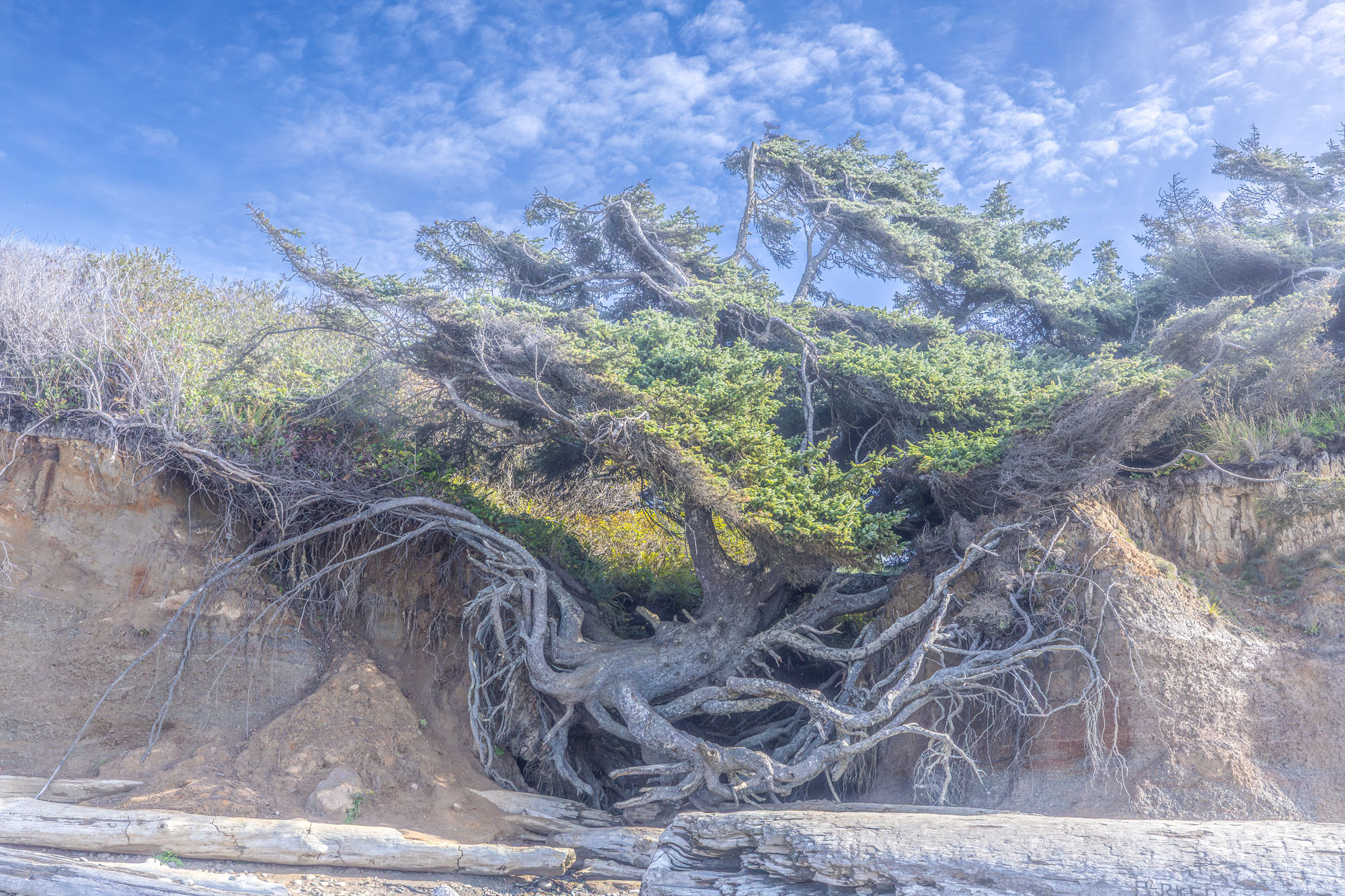
I drove west from Sequim with camping gear and cameras to photograph the Kalaloch Tree of Life, the Sitka spruce whose exposed roots stretch across an opening in the coastal bluff above Kalaloch Beach. I camped, hiked along the coast, and spent time at the tree. Then I researched its story and wrote “The Tree of Life,” a four-page feature with my photographs, published in the Fall 2025 issue of CM Digital Artist Magazine.
I had seen the familiar image of the tree suspended above the gap. Being there gave me a chance to look at more than that striking shape: the coast around it, and why the ground beneath it keeps disappearing. This post shares what I learned, including how to visit safely and how to photograph the tree well.
What is the Kalaloch Tree of Life?
The Tree of Life is a Sitka spruce on the bluff above Kalaloch Beach in Olympic National Park, just north of Kalaloch Lodge and near the Kalaloch Campground. The opening beneath it is sometimes called the Tree Root Cave. The tree’s roots span the gap, and a small stream runs through the opening toward the beach.
Kalaloch is one of the most visited areas of Olympic National Park. It sits on the southwest coast of the Olympic Peninsula and is reached directly from Highway 101.
Why the ground beneath the tree is disappearing
Visitors often describe the Tree of Life as a symbol of resilience. The tree has earned that. But the opening beneath it tells a second story, about change on this coastline.
The gap was not carved by the ocean alone. According to National Parks Traveler, a culvert built above the tree in the 1960s to supply the nearby campground sent runoff toward it, and later efforts to stabilize the bluffs added to the erosion around it.
In early January 2025, storm surge and runoff enlarged the cave, and the tree dropped about five feet. People had once been able to stand beneath the roots. Afterward, the base of the tree sat near the bottom of the cave, partly resting on logs the tides had pushed in. The park has said it will let nature take its course rather than prop the tree up.
The bluffs around the tree are moving too. Ian Miller, a coastal hazards specialist with Washington Sea Grant, told The Daily World that over a decade of his measurements, bluffs north of Kalaloch Creek retreated a few inches a year, while those south of the creek, closer to the lodge, retreated as much as 3.5 feet a year.
That is the part of the story the word “resilience” leaves out. The tree has held on. The ground beneath it has not.
Visiting the Tree of Life: what to know before you go
Check current conditions first. The tree has changed repeatedly, so don’t plan around anyone’s photographs, including mine. Call Olympic National Park at 360-565-3130 before you make the drive.
Check the tides. The National Park Service advises checking tides before hiking this coast, because some areas become impassable at high tide. Current tide charts are available at the Kalaloch Information Station.
Plan your camping early. Kalaloch Campground is open year-round with 175 sites and fills quickly in summer, so reserve as early as possible through Recreation.gov. South Beach, just to the south, has about 50 sites and is open from Memorial Day to late September.
Make a day of it. The Hoh Rain Forest is about a 45-minute drive north of Kalaloch, and Ruby Beach is nearby as well.
Give the tree space. Stay off the roots and the bluff edge. The ground there is already failing, and climbing adds to the problem.
How to photograph the Tree of Life
A familiar landmark raises a practical question for any photographer: how do you make an image that isn’t the one everyone already has?
My advice works at any famous location. First, make the photograph of the detail people came to see. Then step back and make one that shows where it is and what is happening around it. At Kalaloch, keeping the bluff and beach in the frame tells the fuller story of a tree on a changing coast.
My current photography kit includes a Canon EOS R6 Mark II, an RF 15-35mm f/2.8, and an RF 70-200mm f/2.8. The wide lens gives me room to show the tree within its surroundings, and the telephoto isolates root and bluff details from a respectful distance. These are my recommended starting points for a visit today, not the settings behind my magazine photographs:
Wide views of the tree and coastline: Start at f/8. That keeps both the nearby roots and the distant shoreline sharp. Focus about a third of the way into the scene, and watch the corners of the frame, where wide lenses stretch anything close.
Root and bluff details: Start between f/5.6 and f/8 with the telephoto. Use f/5.6 to isolate a single root against a softer background, and move toward f/8 when several layers need to be sharp.
Shutter speed and ISO: Set these by the light, the wind, and what you want the water to do. For sharp handheld frames, use 1/125 or faster on the wide lens and 1/250 or faster at 200mm. Freeze waves and spray at 1/500 or faster. For softened surf, use a tripod and a shutter speed between 1/4 second and 2 seconds, usually with a neutral density filter in daylight. Start at ISO 100 and raise it whenever you need a faster shutter speed. A sharp photograph at a higher ISO beats a blurred one at base ISO.
Protect your highlights. The opening beneath the tree is often much darker than the sky and surf behind it. Bright sky and white water lose detail permanently when overexposed, so turn on your camera’s highlight warning. When the contrast is too great for one frame, bracket several exposures from a tripod and blend them later.
Welcome the overcast. Soft, cloudy light is common on this coast, and it reveals the texture of roots and soil without harsh shadows.
Protect your gear. Use a lens hood in rain and spray, carry a microfiber cloth, and wipe your equipment down after each day on the beach. Salt spray dries into a haze that ruins sharpness.
After the trip, I reviewed my photographs and researched the tree and its changing setting. I wrote “The Tree of Life” and submitted it with my images to CM Digital Artist Magazine, an art and photography magazine focused on the Olympic Peninsula. The magazine published the four-page feature in its Fall 2025 issue.
A photograph records how the Tree of Life stood at one moment. It cannot promise the same view will be there on the next visit. That is the best reason to go: not to collect the famous image, but to see a coastline in motion and photograph it honestly while you can.
You can read more about the Tree of Life in Washington State on Visit Olympic Peninsula or explore its location near Kalaloch Beach in Olympic National Park via NPS.gov.