
An encounter in Everett and a $137.75 fill-up in Kingston put Washington’s gas prices into perspective.
By Tom Buscher
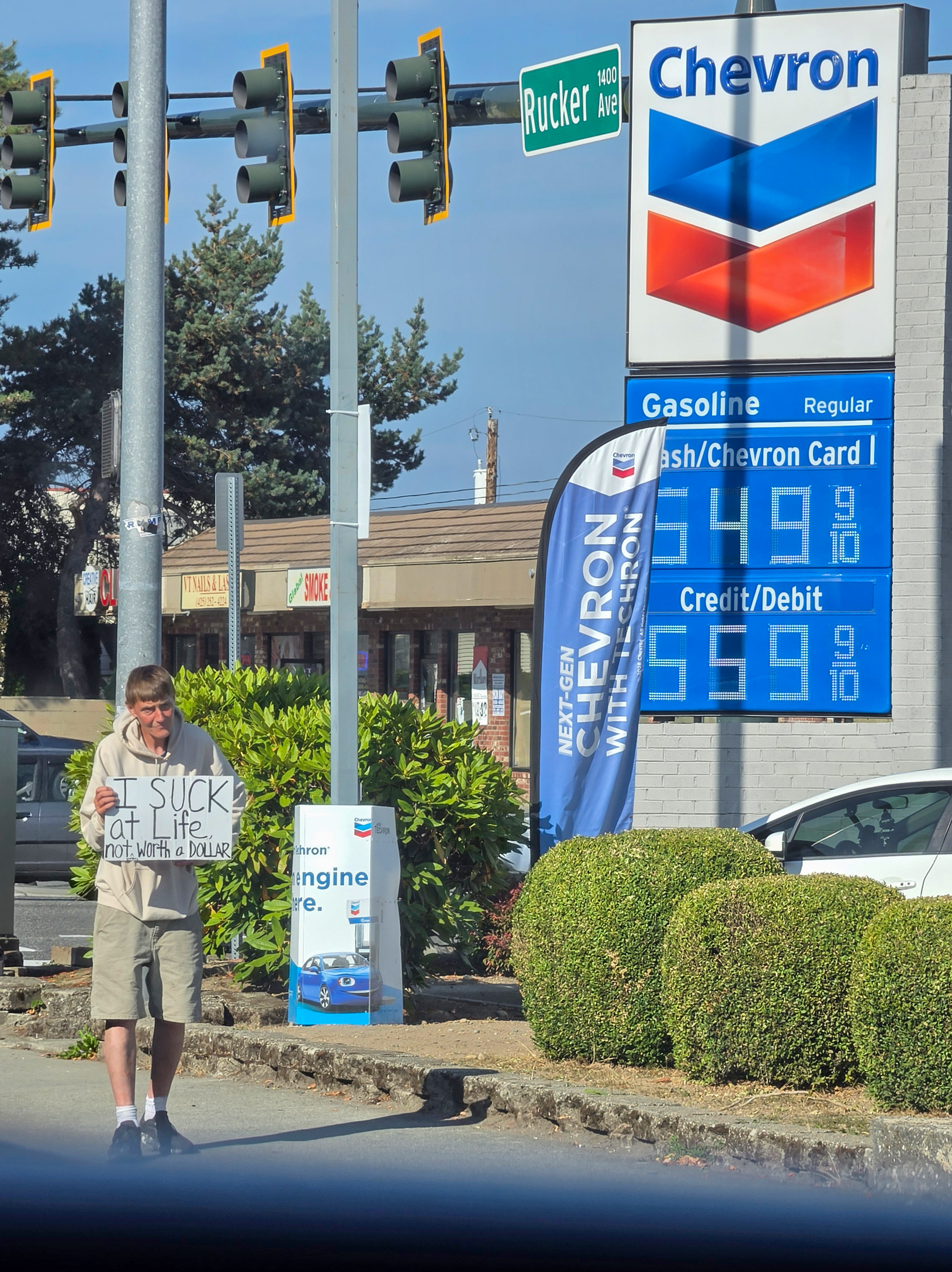
“I suck at life, not worth a dollar.”
I saw those words on a man’s sign in Everett on Saturday. He stood near a gas station charging $5.49 a gallon for regular. The contrast stayed with me long after I left Rucker Avenue.
That night in Kingston, I watched the total climb on a gas pump until it stopped at $137.75. The truck had taken 25.050 gallons.

Washington’s minimum wage is $17.13 an hour. Eight hours at that rate pays $137.04 before taxes, already 71 cents short of the fill-up. The tank cost more than a full shift’s gross pay.
I know a single tank is not everyone’s weekly expense. But transportation is part of how people earn a living, and its cost is paid before they can use that paycheck for anything else.
What a gallon costs in minutes of work
Across Washington, regular gas averaged $5.56 a gallon on Sept. 19, according to AAA figures checked that day. A year earlier, it averaged about $4.64. At the state minimum wage, a gallon now costs nearly 20 minutes of work, compared with about 17 minutes last year. A 25-gallon purchase costs roughly $23 more.
Wages do not move the way prices do. Washington’s minimum wage rose 2.8% in January, with its next annual adjustment taking effect in January 2027. Nationally, average hourly earnings adjusted for inflation fell 0.3% over the year ending in August.
Why Washington gas prices are so high
Crude oil, refining, taxes and distribution all contribute to the price at the pump, according to the U.S. Energy Information Administration. Washington’s state and federal fuel taxes together account for 74.9 cents a gallon, after the state tax rose to 56.5 cents on July 1. The EIA’s September outlook expects constraints on Middle East oil exports to persist through the end of the year.
Beyond one tank of gas
The pressure extends beyond one receipt. The Bureau of Labor Statistics reported that gasoline accounted for more than a third of August’s monthly increase in consumer prices. In the Federal Reserve’s 2025 survey, 63% of adults said they would cover a hypothetical $400 emergency entirely with cash, savings or a credit card paid off at the next statement. That survey was taken before this September’s prices.
Knowing where the money goes does not make finding $137.75 any easier.
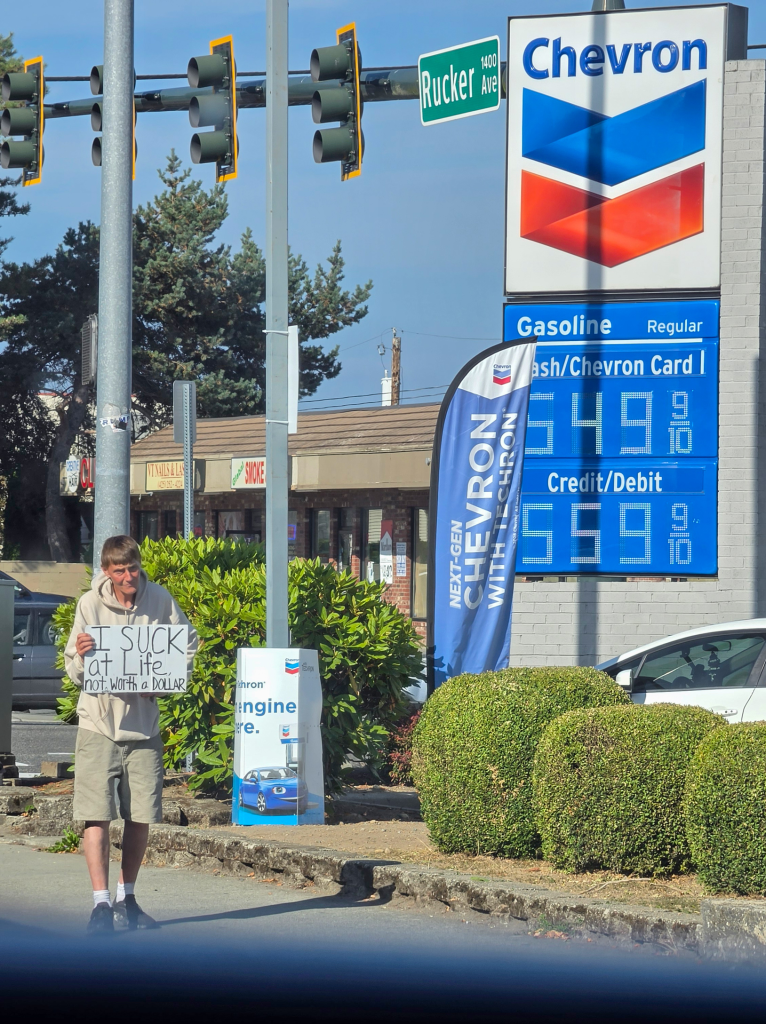
I keep coming back to the sign in Everett. I drove away from Rucker Avenue, but “not worth a dollar” followed me to Kingston. By the end of the night, I knew exactly what a tank of gas had cost.
Captivating Photography
Keep local coverage going
No paywall here and no ads. This site runs on the store. If this post was worth your time, spend a minute in the shop.
Cedar & Shore Studio is my business. It funds this site.

Leave a Reply
You must be logged in to post a comment.